
The Cynical Optimist
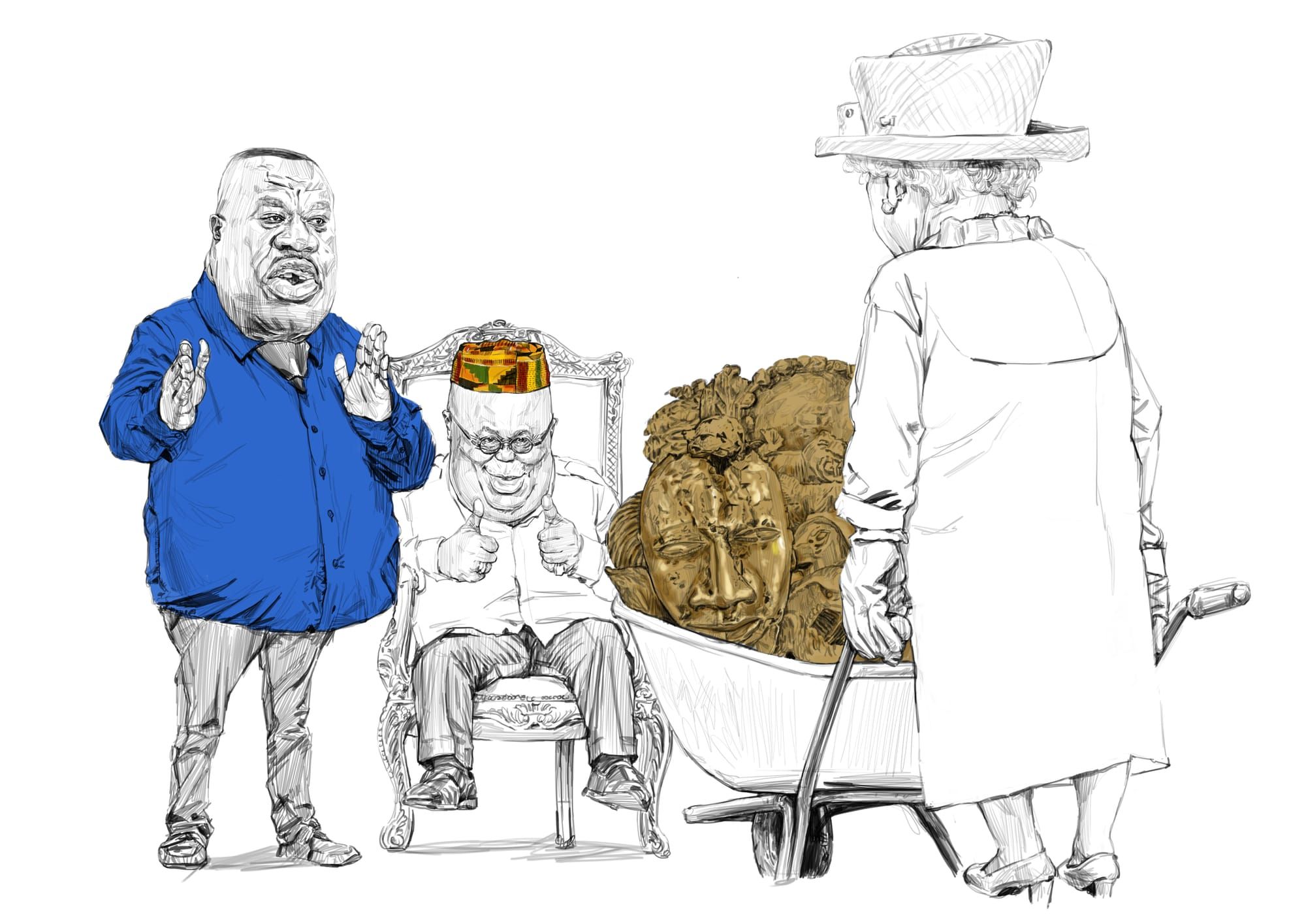
Who dares be the truth teller? Social commentator and satirist Bright Ackwerh (he/him) is a formidable force in Ghana’s political landscape. Calling out issues from corruption to colonial pressure through his outstanding illustrations, Obi Mgbado (he/him) asks Bright about his influences, dealing with state-sponsored cancel culture and creating our front cover.
Obi Mgbado: Hi Bright, how’re you doing today? Are you in Ghana right now?
Bright Ackwerh: Good morning, I’m doing good. Yes, I'm in Kumasi. Are you familiar with Ghana?
OM: I’m good, thanks. No, not yet but I plan to visit.
BA: Kumasi is the second most active spot after Accra. Here, we’re more inland, it tends to be more quiet with fewer distractions. I go to Kwame Nkrumah University of Science and Technology and have been here for a while.
OM: How long is a while?
BA: I first came here in 2007 starting with four years of undergraduate, a year of national service, and then about three years of a postgraduate program. I’ve also spent time in Accra and Tamale. Anywhere the weather takes me, as long as I can take my laptop and drawing tablet, I'll go anywhere.
OM: How would you say Ghana is perceived by the outside world?
BA: Anytime someone says that they want to come to Ghana, I first ask them why and what they are looking for.
It's very easy to get sold on the experience of Accra and one may think that it’s a realistic picture. Even in Accra you are going to be shown the most presentable parts.
But if you want to understand what is really going down, you have to see and be aware of certain things.
OM: Ghana was the first African nation to gain independence – as a Nigerian I was always in awe of the spirit of Ghanaian people to push for that. Your work as a satirical illustrator shows a side to the country today, especially its politics and people’s daily lives, that people may not be aware of.
BA: I could go on and on and on for days and never stop. I look at our situation objectively. There is huge potential right in front of our eyes. Everyone can see the problems and solutions and they’re articulated so well during election campaign season.
When candidates come into power, the people just want them to do the damn job that they said they would do. If you do it right, the people will reward you with whatever you want – with that approach a party could stay in power for fifty years. The people wouldn’t deny you anything.
Someone could go down in history as the best president, while being paid huge amounts of money and being afforded a thousand privileges. Instead they turn out to be worse than the group they criticised on the campaign trail.
This is where I fail to understand because it's so difficult to marry the two positions. You know, candidates are so brilliant in opposition and once in power are so dumb. It's just unimaginable.
The worst part is that people aren’t allowed to call it out. Journalists who berated the opposition to help a candidate be elected are suddenly quiet – appointed to attractive positions in institutions that pay them very well.
Meanwhile when something serious is going on, the biggest radio stations are discussing jollof rice or bread from South Africa.
For someone like me and what I do now, I literally shoot myself in the foot because I become the one person who always looks dissatisfied and always with something to complain about.
Art has a responsibility to look at and articulate these things. However you get cancelled by the art institutions that are meant to support expression because they want the opportunities that come with being in the ‘good books’.
All this makes the work interesting but difficult because the moment that happens, you get cancelled, censored. You never get platformed properly and nobody wants to put you on to opportunities.
Maybe they manage to force you to conform or go do something else because you are trying to love this thing while the thing you are trying to love is killing you in return.
You have to go where you’re appreciated when you have the skill set to succeed in any other industry.
People ask me why not travel to the West?
But why do I have to go to the US to get rich?
People in the US see that what I do is worth investing in but why can’t I stay here and make it with my own people?
OM: What exposure did you have to satire growing up?
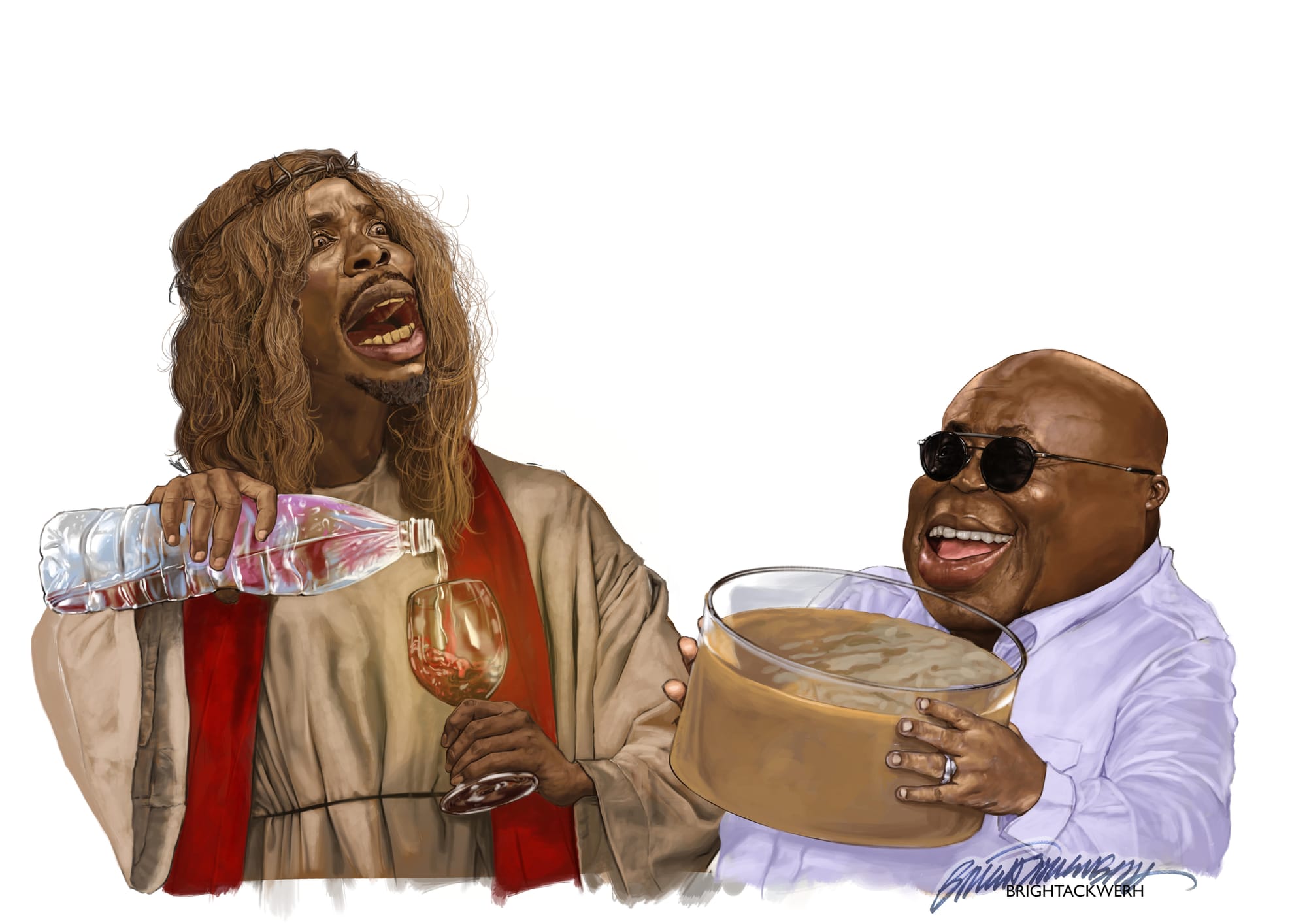
BA: I grew up seeing people do this. My father used to buy papers, the dailies, the Saturday papers and there was always space in there for artists to satirise a social topic – it wasn't just about politics.
There were also these scandal and gossip stories, like ‘massa has gone to work, so the servant has a little affair with the madame.’ This kind of thing was expressed in cartoons.
I wasn't old enough to have a full appreciation of the stories, but I just saw those cartoons. Politics or social issues were communicated in visual arts and also theatre. Theatre was broadcast on national television where some of our most well-known and established comedians today started their careers.
Music too. Artists used characters and devices to swerve having to mention names directly – once you tuned into it, you knew who they were trying to talk about.
So there’s a legacy of all these slots existing for people to criticise government or royalty or chieftaincy…
OM: So it’s really a part of Ghanaian culture.
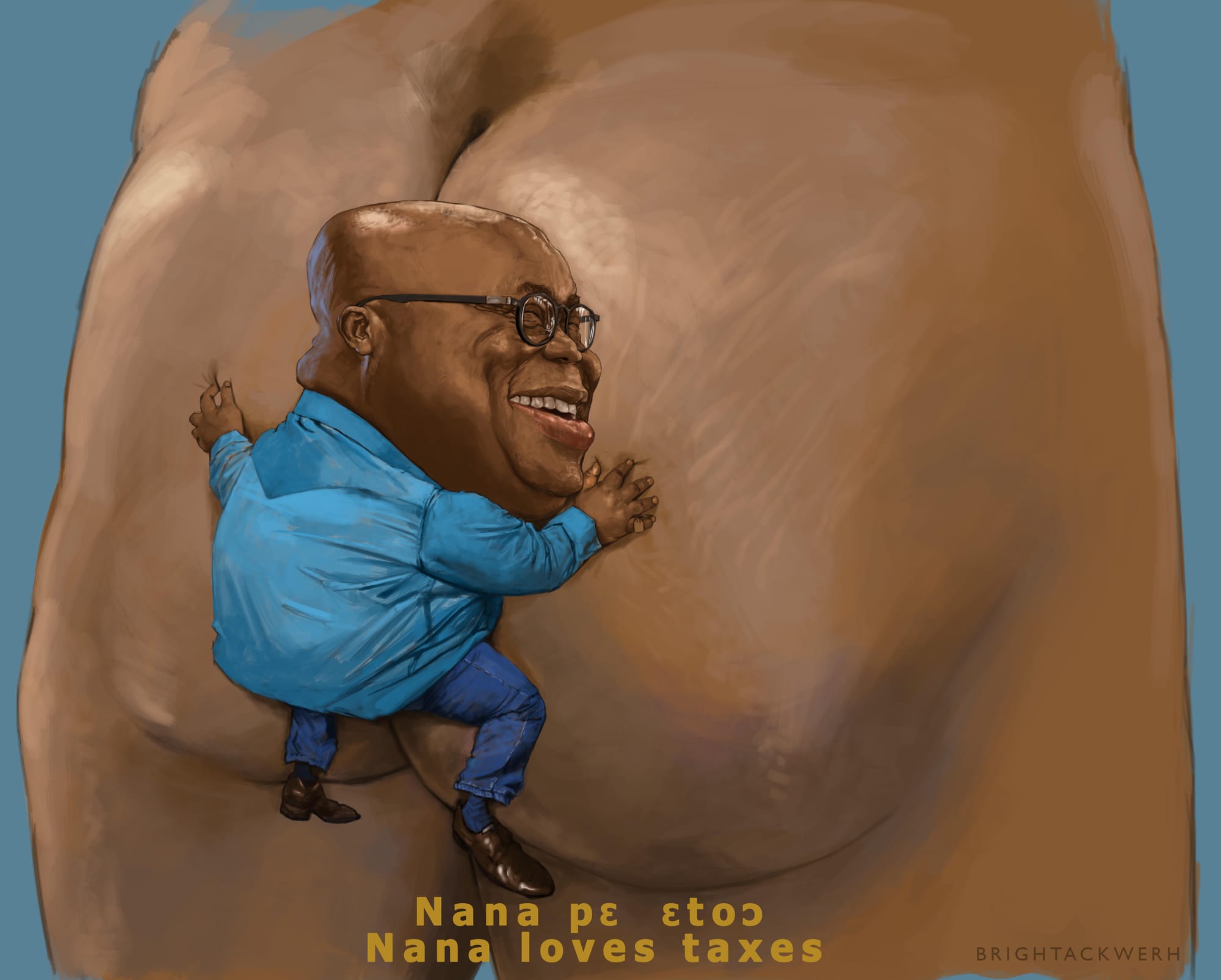
BA: Yes, however, as I’ve come to learn, it is also a very controlled space. You’re allowed to express maybe 2% of your dissent.
As part of the younger generation of artists, I didn't start out making political satire. I used to make other kinds of work and then something happened that brought me in this direction.
By the time I started, we had the internet and social media which is more permissive than traditional media. It's very easy for anything to blow up before some sanctioned newspaper or radio program takes it up.
Information is spread far and wide because it's easy to access. It can be lies, it can be disinformation – but it can also be the raw truth.
The moment I started with cartoons and put them online, I realised it’s easy to step outside of that 2% and that is where you start getting into trouble.
I think generally that Ghana, and the world in general, has become more sensitive. Some kinds of inappropriate jokes are fun because they're inappropriate. I don't know how you can tell a joke that is respectful.
The only rule that I consider is don’t punch down, otherwise everything and everyone is fair game.
But politicians don't want to be in the game at all.
Meanwhile everything they do deserves to be talked about so, again, it falls on the artists to use their work to try and address these things so that society can work. And that comes at whatever cost it comes at.
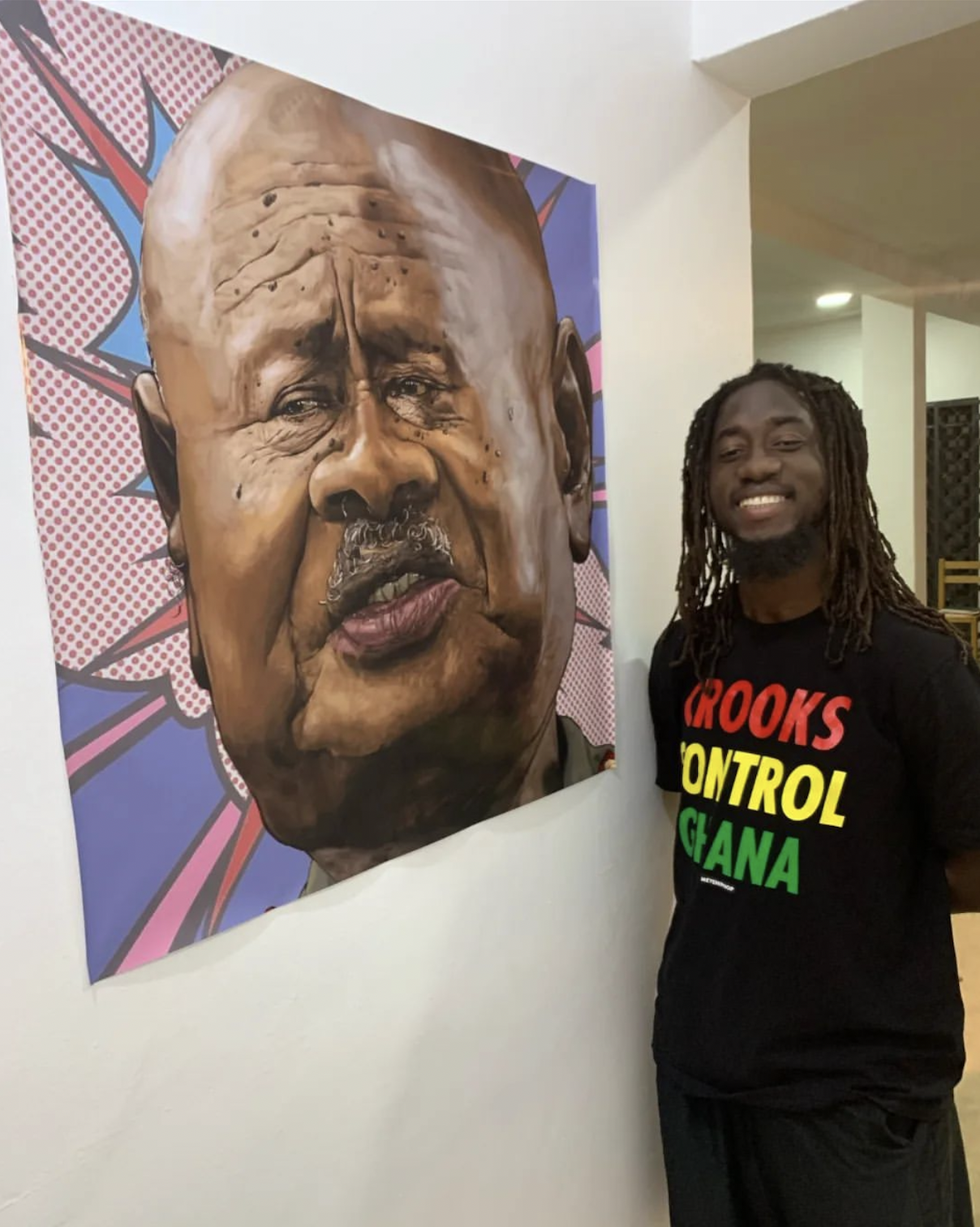
One of the things that differentiates my work from everybody else is that, fortunately, or unfortunately, depending how you look at it, I didn't use a pseudonym which puts me in a not so favourable spot.
If I had known, I would have created a pseudo character for all my political work and used my name to do my other work publicly.
What I tell people is that there's a certain extra value to telling the truth and not hiding it – to showing your face.
If the person telling the bare face lie is bold enough to tell you to your face, why do you have to hide to tell the truth?
That only promotes some kind of fear and once you lose your fear, they lose their power.
I want to promote telling the truth publicly to motivate others to do the same.
OM: Do you think being in an educational institution these past ten plus years has aided in keeping you safe when voicing these perspectives?
BA: I haven't gotten into that kind of trouble yet, and I hope to never get into it.
I don't know if my institution will come to my defence or something like that but one of the pros of being named rather than using a pseudonym is that if you go missing, someone will notice it. If you’re lurking in the shadows and go missing, nobody knows and they just assume you are doing something else.
There is a section of the media that is aware of me and my existence so I believe someone will say something on my behalf if something were to happen to me.
OM: You have an important voice and, subsequently, an important role to play in opening people's eyes. Would you ever leave Ghana so you could continue to make this work?
BA: Yes. In the past I wouldn't have but now, if it became necessary, I would.
I'd go somewhere where I know my well-being will be guaranteed.
But you know what, the monitoring and censoring, some of it is overt, some of it is covert. The Chinese, the French, the British, the Americans… They all have their own ways of monitoring and regulating people's voices. The gatekeeping can be more direct or look more like restrictions in access to funding for cultural production and opportunities.
When it first happened to me it hurt. But now I can use these cases as evidence of these things happening. You have to experience it to know it.
OM: Your work is at the intersection of satire, research, politics and history. Why is illustration your chosen medium of communication?
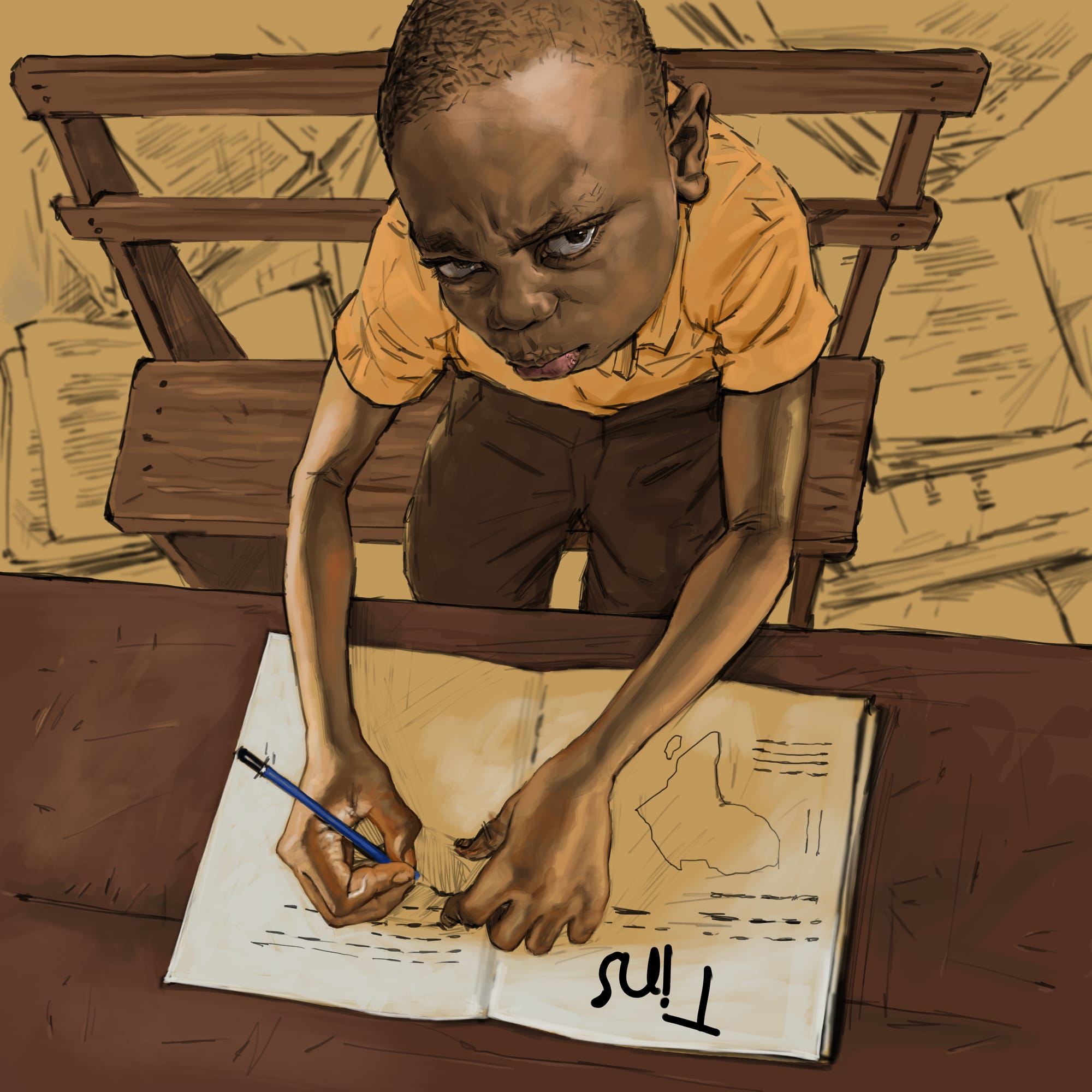
BA: Because of what I was exposed to in my training as a student artist. As a little kid, I used to try and copy the images in the comic books or my father’s newspapers.
I had the privilege to study art history at school. I became aware of how artists of old could do the kinds of things that I'm trying to do now and realise that certain mediums of expression serve a purpose better than others.
Satire can be expressed in any kind of medium or format but illustration comes with certain perks.
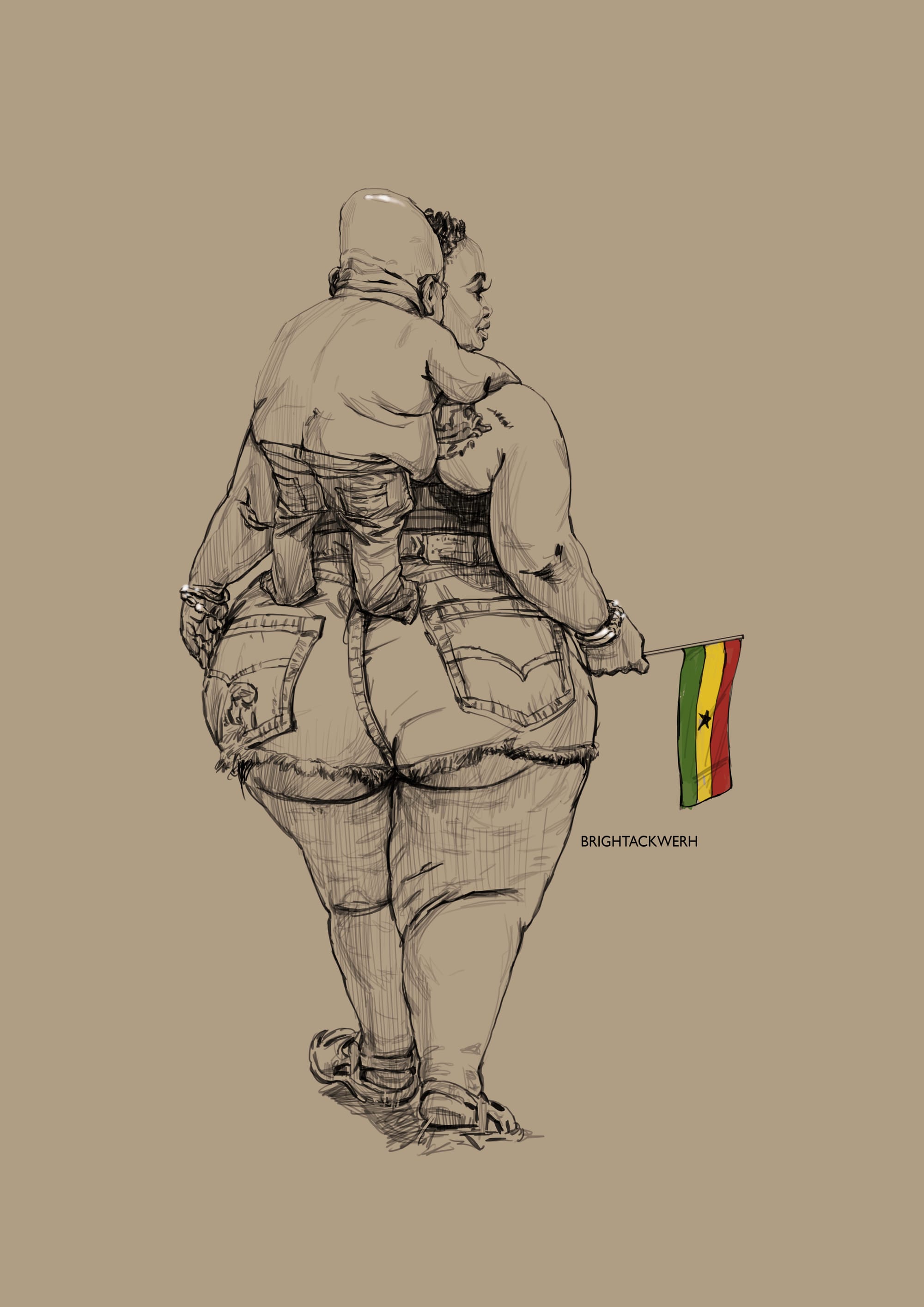
In today's world we are so overstimulated and overfed with images, you need a medium that is easy to disseminate, produce and digest. It's quite easy to see an illustration and form your own story from it. I don't need to tell you what is going on because once you see it, you understand.
If, for example, you have a perception of Ghana and you are not familiar with the narrative I’m trying to push, the kind of stories you relate to in my work may make you question those pre-formed ideas.
I was looking for a very simple medium that was relatively easy to make and fast to produce. Every other day there’s a new scandal so making work at pace prevents a disconnect with the time. Then through social media it’s easy for the work to go out in the world.
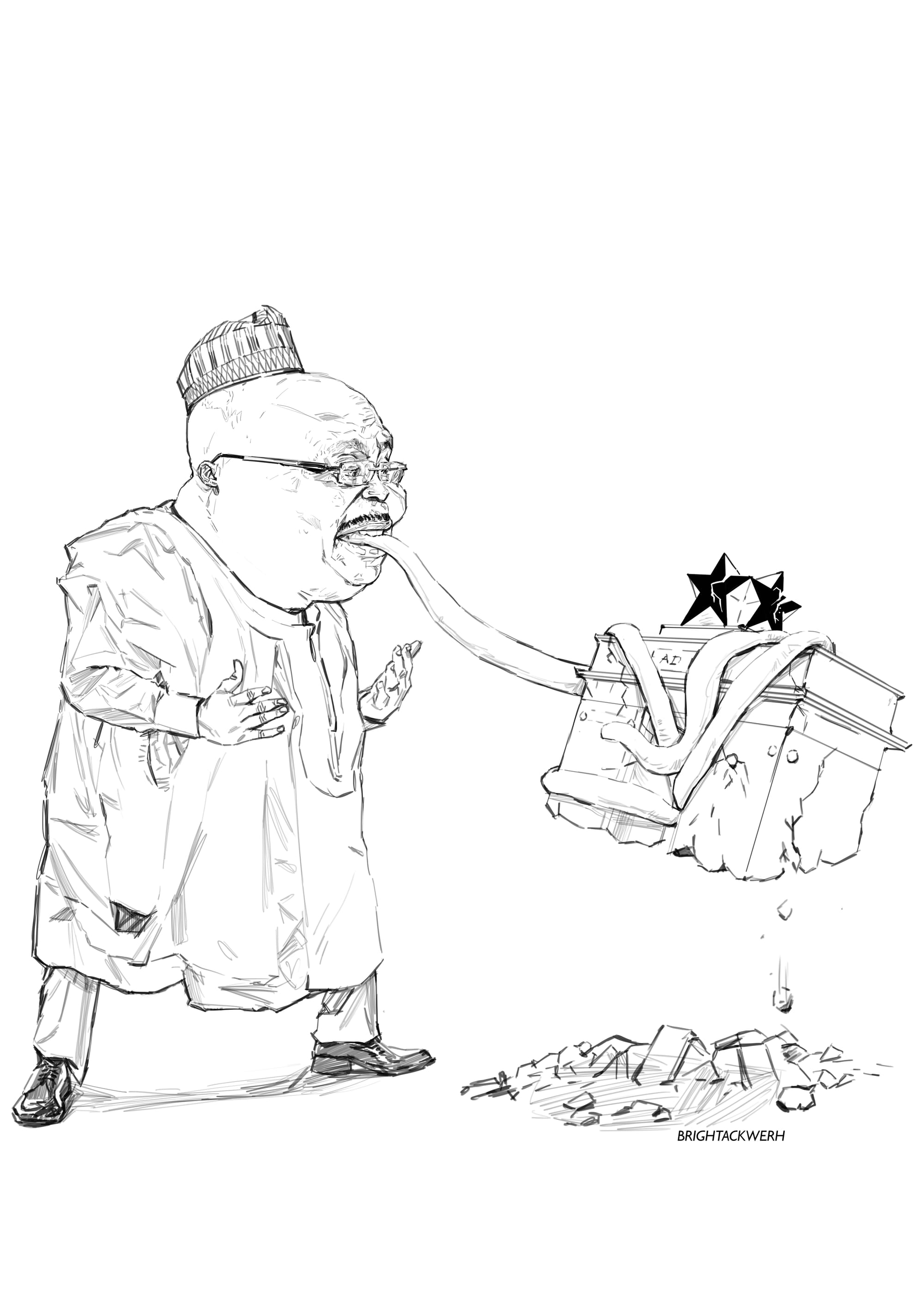
OM: As a West African, was art something that was big in your family or were you the first to break away and do something like this?
BA: I would say I was the first in my family. I grew up in a nuclear family where nobody was really making art – the closest was my mum who used to sew.
Being from a working class family meant everybody had to hold their own for the household to be comfortable. If you were going to be occupied with some kind of work, it had to be lucrative and art at that time was not thought of as something that paid.
I took my first art program in senior high school. My dad wasn’t supportive of it. For him I was intelligent, I’d passed my exams and now qualified to do a course in business or sciences – the prestigious areas of study that put you on the path to a high paying job like a doctor, lawyer or engineer.
I went to the Accra Academy and lived in the school because my dad was a teacher there. He taught history, government… subjects that I'm interested in today.
We had several conversations about me doing the art class and it happened that the next door neighbour was the art teacher. Before even reaching senior high I knew that he taught the subjects that I liked.
I also study stand up comedians. Dave Chappelle is a master of this, sometimes taking an hour to tell one joke. By the time he arrives at the end of the joke, he’ll have taken you on a journey through US racial politics, immigration, political history, the Black struggle for survival and religion.
Merging the very sombre with the crass is the job of a satire. That layering of difference is what I use to make you arrive at that same ceiling of excitement and joy in the form of illustration.
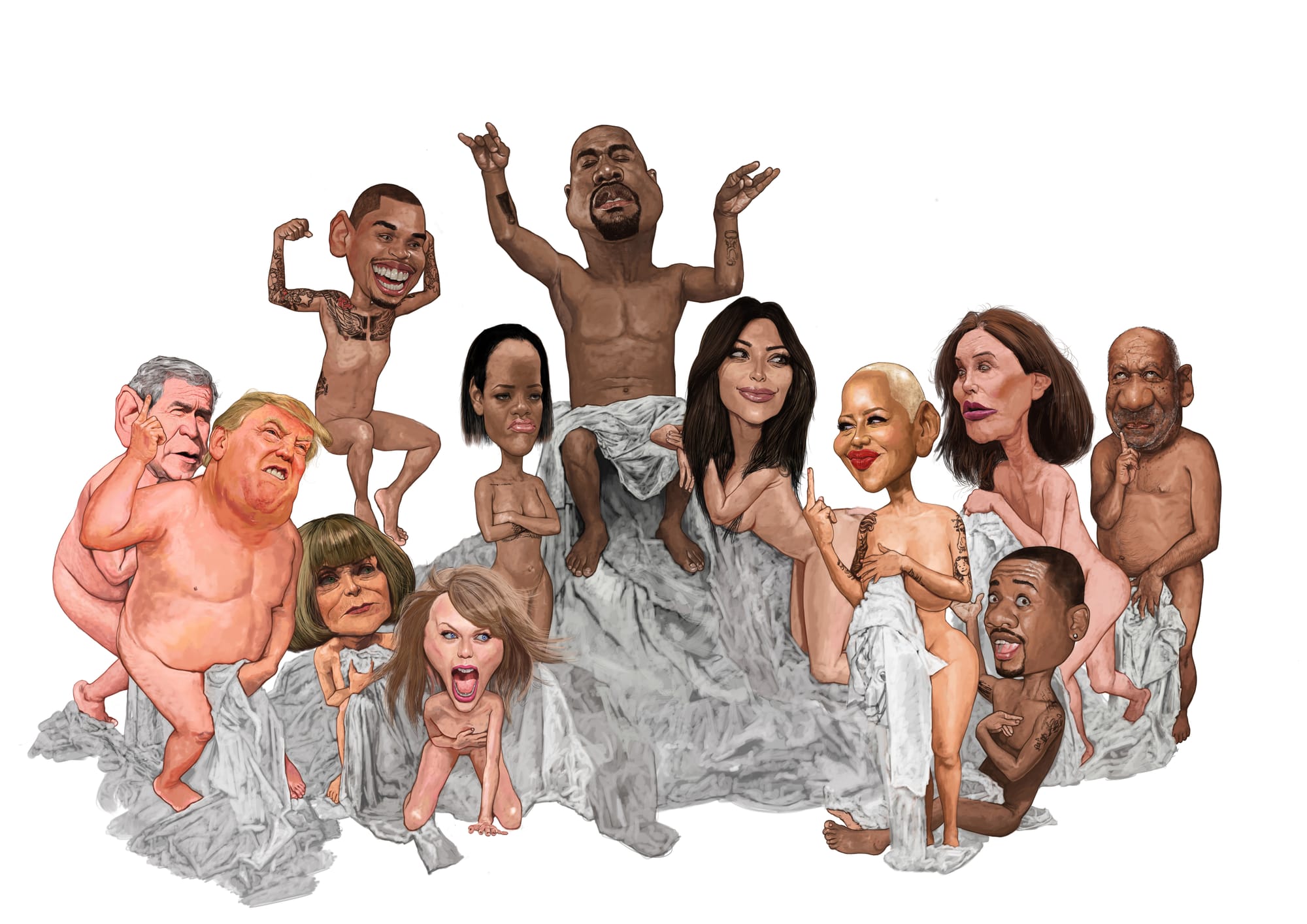
Usually when I start painting, I don't have a very complete image in my mind. I just know that one subject in the image is doing X,Y, Z.
While I'm doing it, I'm still researching – reading online, searching for new information to see how to add it to the image.
I make a lot of little edits until I feel like ‘okay, now this is done, I'm ready to put it out into the world’.
With the front cover image that we are working on right now, it's a huge complex thing so at the start I just have this idea of what the inspiration behind the image is.
It sounds romanticised, but I let the image speak to me.
If everything is planned out before I start it’s too rigid, it’s not fun or exciting for me.
What’s exciting is that there's always the possibility for the image to fail however you will succeed. I experience so much joy in the process of creation.
When I see the final thing, I know exactly how much I needed to do to pull it off.
The next person might just think ‘oh, they probably used AI or something’ but I needed to know every single corner, understand what to take out and shift around. That’s the fun part for me.
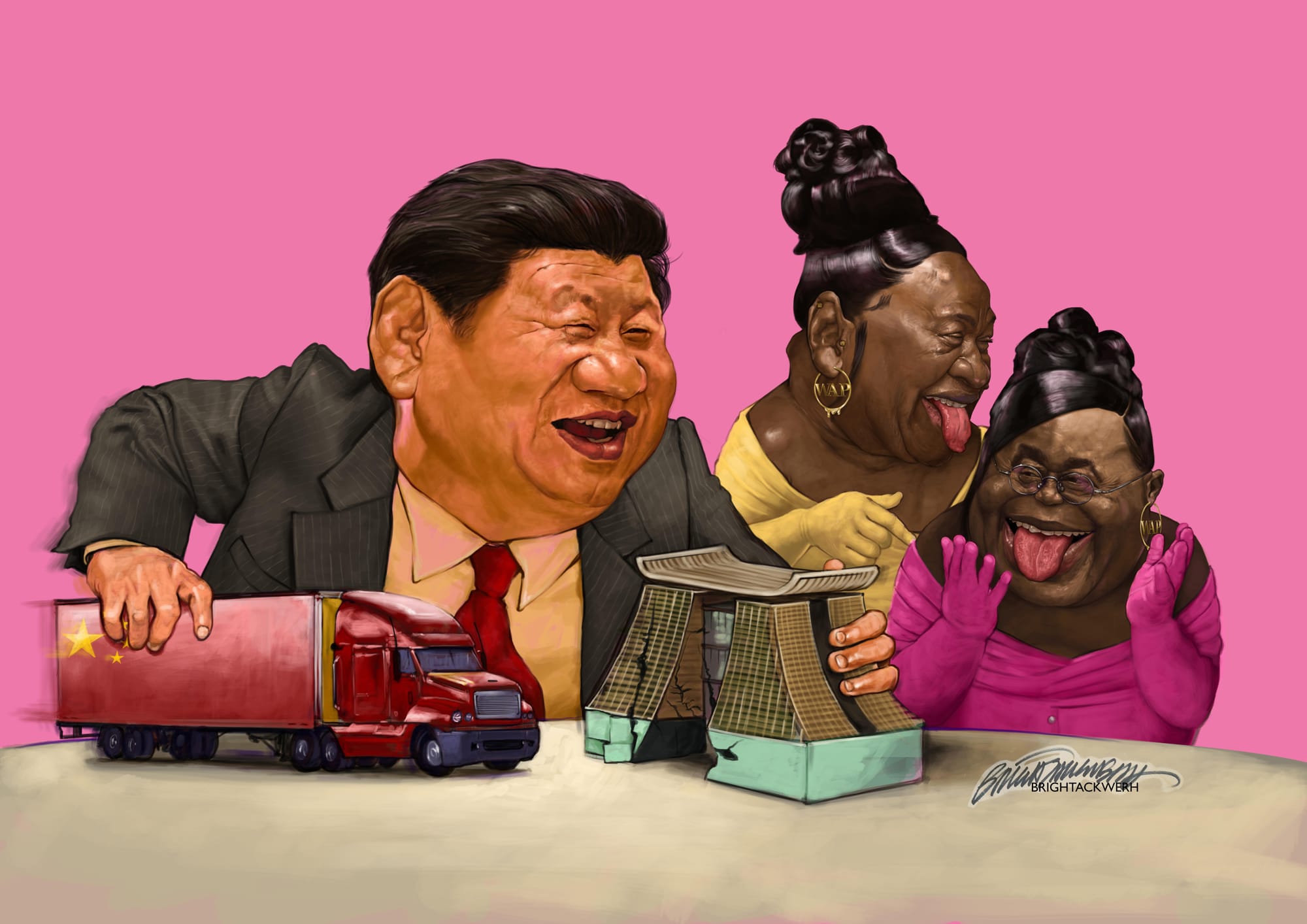
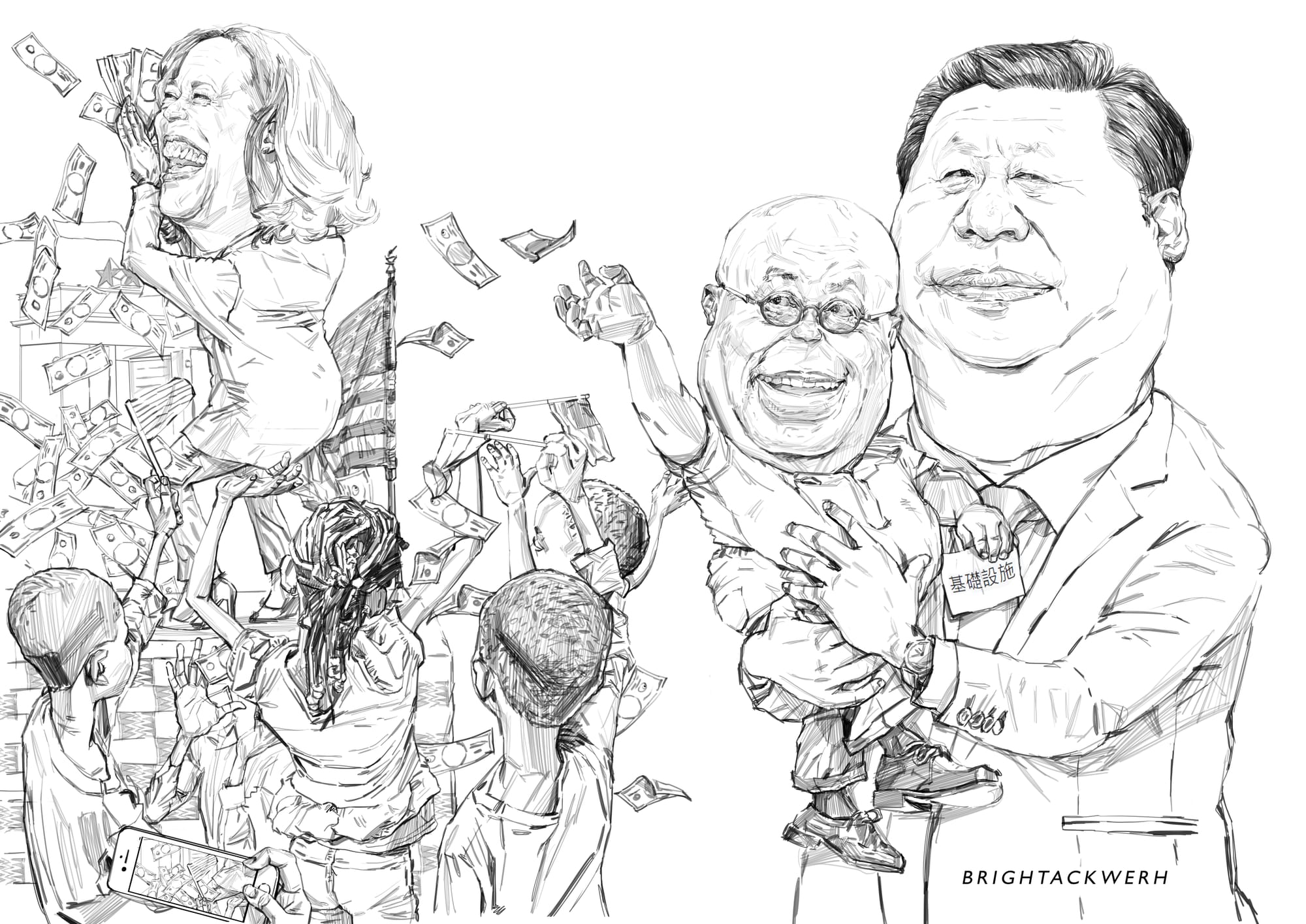
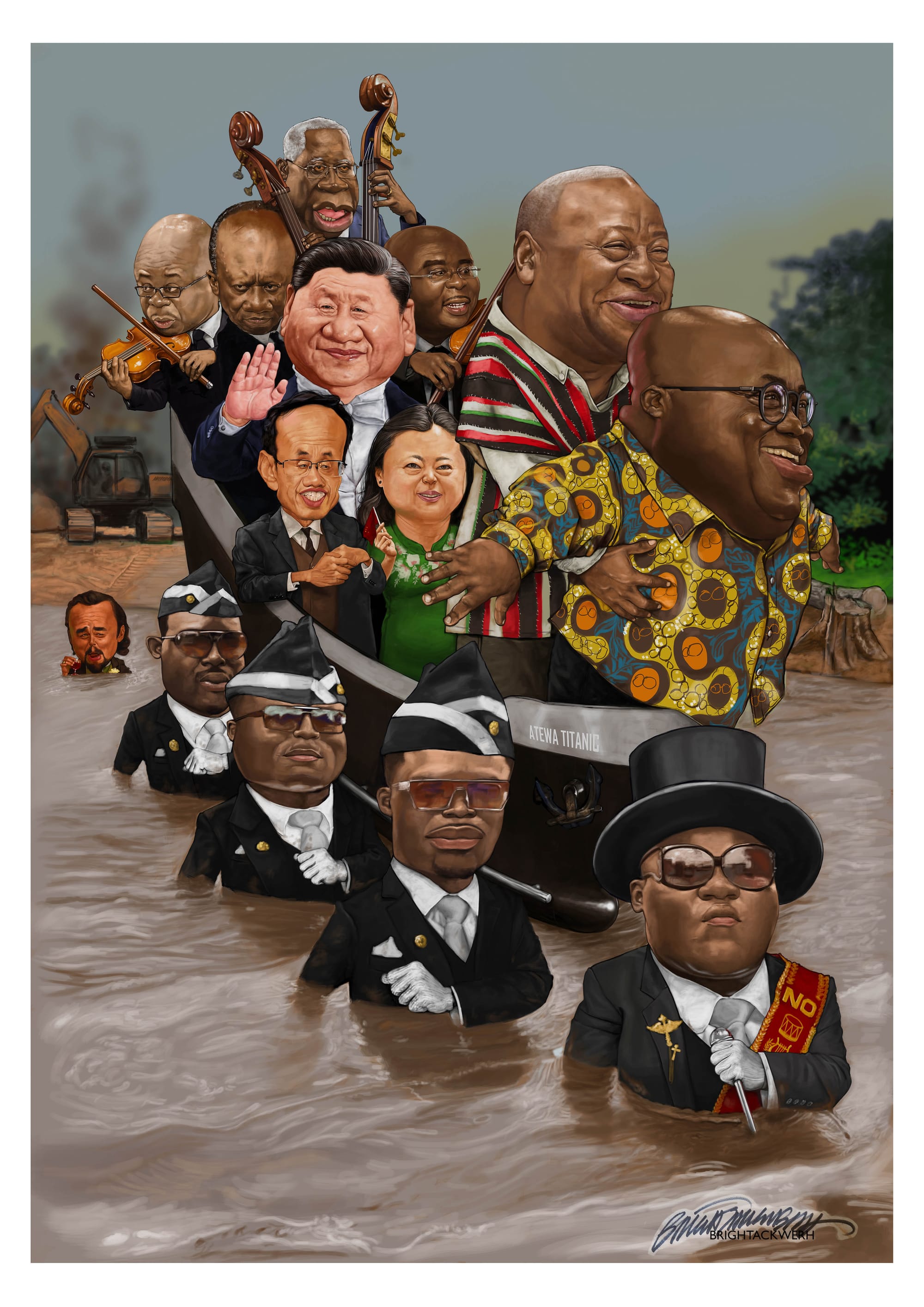
OM: Your voice is very honest and educates without being pretentious. You shifted my perspective with the details, say from the way that the former President's belly is shaped to the way he's underneath Trump or has a hand reaching out to Macron… It’s a subtle education in a time when politicians are trying to be influencers and influencers are trying to be politicians so I hope people start to give you your flowers.
BA: Thank you, I appreciate that.
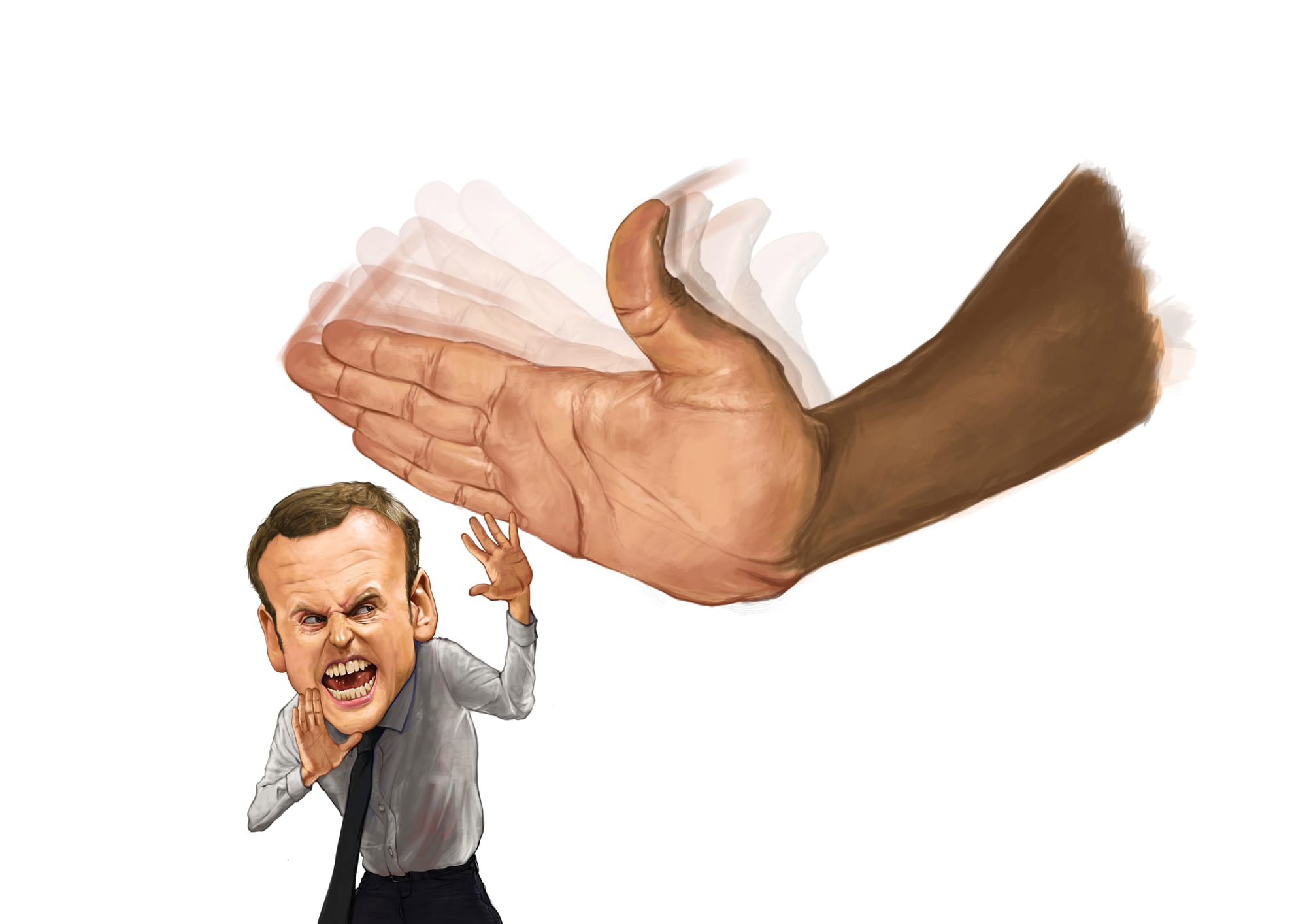
OM: So my next question is how much does Ghana’s rich history of visual storytelling translate into political commentary?
BA: Political commentary here has always existed and people do it freely. On the radio in the morning, they invite people from the two main political parties and they platform the same themes that everybody knows or has seen everywhere else.
It ripples to homes, you know. Say with my dad – he fancied himself a political analyst and would impress his perspectives on my mother. As kids, we weren’t allowed to participate in those conversations because we were too young for it – or so they thought.
As I grew older, I’d question some of his positions and he’d meet that with resistance saying his opinion was the truth. But the space was there to do that and it was funny at that time.
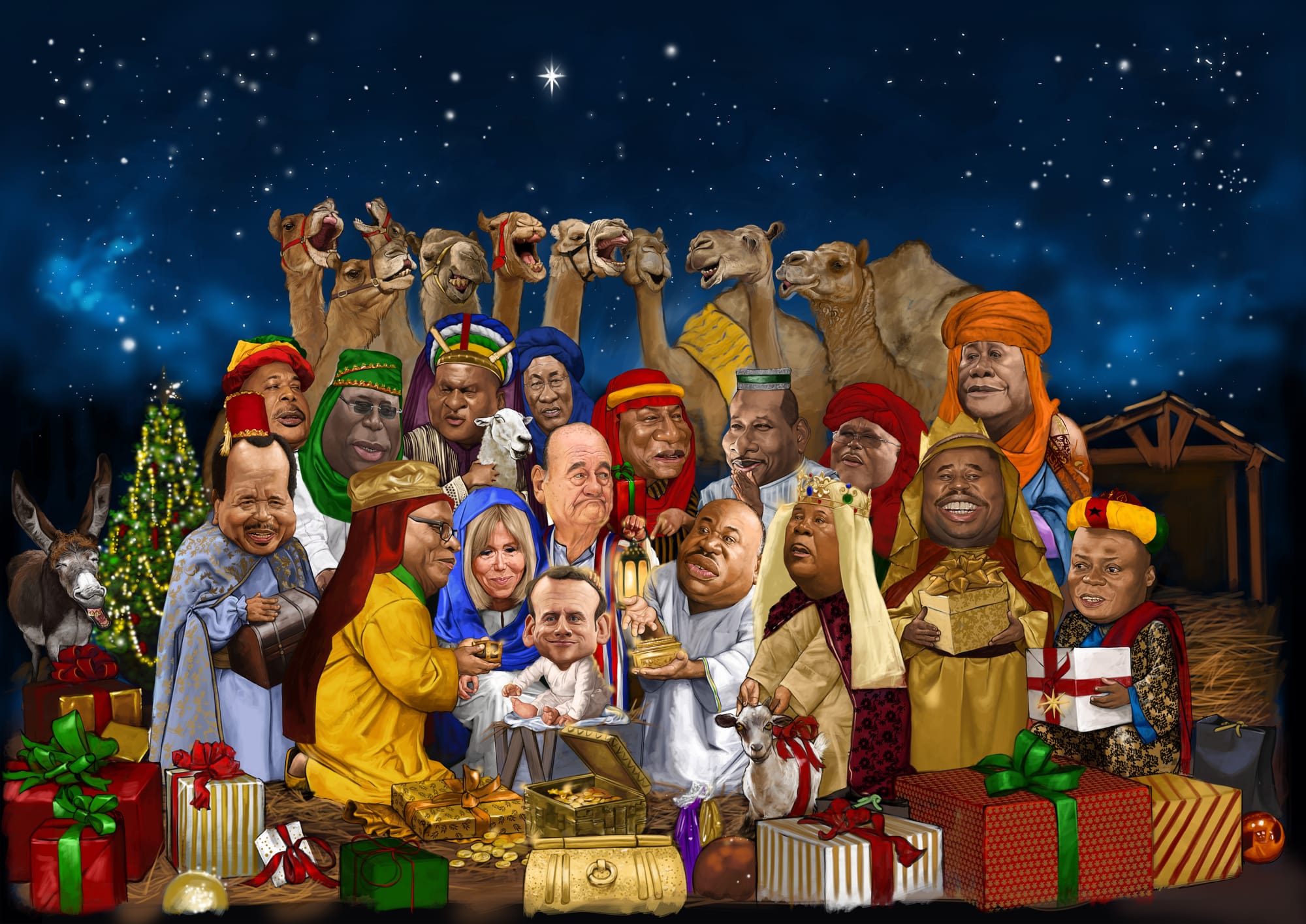
OM: You weren’t allowed to take part in the conversations but were you encouraged to be in the room? What was it that set that trajectory?
BA: Where we grew up, we had a common area and it was where the television and books were. I drew on one corner of this huge table.
Anyone who was in the room was watching TV. His commentary would be in response to something on the news. So as a kid, you were in the room but your presence was not to be felt.
If you did anything wrong, your punishment would be to go to leave or get outside so I knew how to play my role. Of course you don't want to be asked to go and sit somewhere else.
After teaching in school, my dad had some private students so when he was detained at the big table, I’d be at a smaller table where I could pick up the volume of the TV if I was very quiet.
I was always overhearing him. It was like he had memorised whole history books. I wish he were alive today because there are projects I'm doing now that would have been so lovely for us to do as a father and son. This guy had whole historical accounts in his head that he taught to his students.
Although I never took those courses, I feel like I took those classes and lectures for years.
Before teaching, he worked as an auditor for the last government that was removed by the coup. He was someone who prided himself on being upright and incorruptible.
He felt like the government at the time was taking the country somewhere. Then the military came and killed that project. He disliked the military government that became a civilian government with a passion.
Even to his last days, anything that was to do with the government was a no.
By the time I was old enough to be debating with him, he’d become a staunch supporter of the New Patriotic Party (NPP), which is proving to be the worst party in Ghana’s history.
I’d say to him ‘your people are stealing’ and he’d reply ‘let them steal, I’d rather it’s them than the other guys’.
I’d look at his books, sneak into his room, find his newspapers under his pillow, read them and all that.
All of these things started to sow seeds.
He never really liked that I got into political satire. He’d say that he’d seen first hand how crazy people are willing to be just to defend their politics and he didn’t want me to get involved.
But whether you get involved or not, these guys are deciding your life.
You may as well get involved and try to do something rather than leave all of it to them to decide.
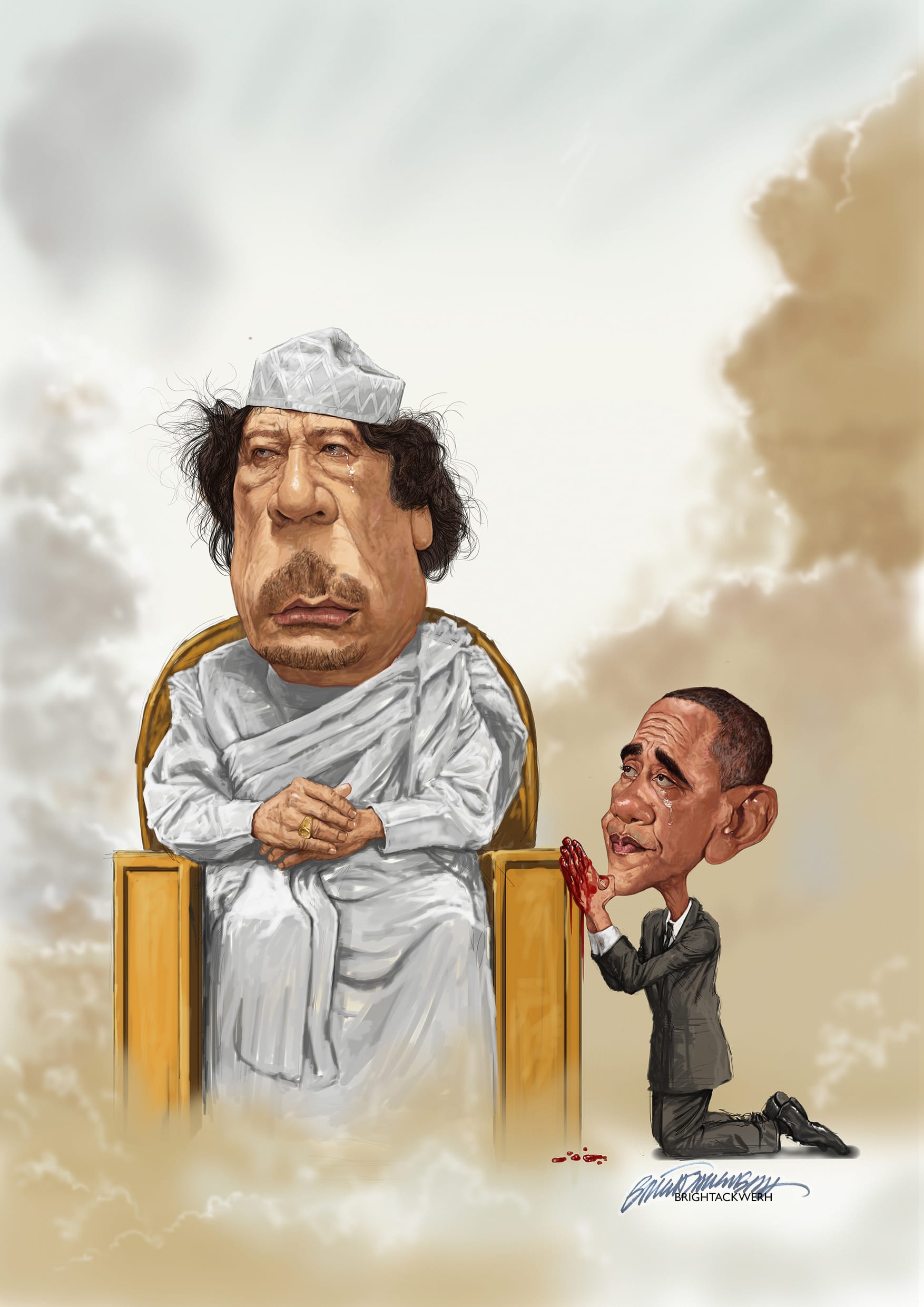
OM: It's evident not only in your work, but also in how you communicate that you have a confidence grounded in awareness. It's not like Instagram confidence – you know what you're saying because you took the lessons. I can just imagine you as a youngster at the end of the table scribbling away, listening to everything, forming your own opinion while drawing. Fifteen, twenty years later, it made you who you are today.
BA: And now, there’s a clamp down on dissent. I'm not saying that to make the current powers that be unpopular, it’s just the truth.
Journalists have been fired, something that has never happened before.
Before, people were encouraged to speak truth to power and journalists became very important people because of how they could ask the right questions to keep politicians on their toes.
You can look back at interviews where journalists, these individual private citizens, ask questions that left presidents fumbling.There was someone who they had to be accountable to. But now it seems like the same journalists – and also artists – have gone quiet.
I made a post on Instagram based on a song called ‘Brown Paper Bag’.
Now that the work is out there, the truth is that when the rapper behind this song is looking for a visual artist, they’re never going to call me. That’s potential money that I've lost out on just for speaking my truth.
Obviously a rap song isn’t going to solve all society’s problems.
But there's a comfort that art brings to the people when artists use the voice the audience gives them to speak on their behalf – because their voices can’t be heard in those same rooms.
Every other week this rapper was putting out music speaking out against the issues people face. Then this artist turns around and connives with the same government that he was criticising. Now, worse things are happening and he can’t write sixteen bars or a Tweet to support a protest. It’s almost like he’s out of the country and doesn’t know what is going on.
To be seen making political commentary, especially when expressing dissent, you’re shooting yourself in the foot because you’re fumbling your bag.
Now you have the state and its cronies – like the foreign embassies – sponsoring cultural production. And so someone like you, Obi, will never be called.
“We know that Obi makes excellent work. Obi’s work is distinct, Obi is not like the twenty five other artists painting the same picture. In Accra, everybody is painting the same picture because one guy did it and it sold for tens of thousands so now everybody wants to make the same image.”
It doesn't elevate the craft nor does it address society's problems.
“Here you have Obi making very important and critical work but we’ll sideline him because we don't like what he’s saying. We claim we see everything but we don’t see him.”
OM: [knowing laughter]
BA: “So if Obi speaks out, he’s just hating because somebody else got it and he didn’t.”
That is a situation that is going on.
Since the new government came in following last December’s election, it will be interesting to see if and how those same journalists change their tune.
When it comes to impact on cultural production, there are examples of embassies taking extreme measures to influence and block the narratives that expose colonial history and practices that are still going on today.
This takes many forms, with embassies taking advantage of their financial dominance and scarcity tactics to issue ultimatums to suppliers in the art industry.
I’ve heard anecdotes where, for example, publishers are given two options if a foreign power feels the work included paints them in a negative light – either remove the offending work from the book and reprint from scratch or cancel their large orders.
As unjust as this sounds, this is just one of the ways that these things work.
This is where art can get too obvious, too pretentious. Just because you want to fit in some book, you self-censor or you don't represent yourself in your best light.
It's all a learning experience. I've had to initiate stuff myself, to try to raise funds for my own shows so that my work can be shown the way I want it to be shown. Then nobody gets to bully me on behalf of their boss. Gallerists don’t remove my paintings because they’re unflattering to the president…
If I don't talk about these things, no one would know that they’re happening.
I wonder what it will mean for political commentary if there’s no space to talk about all the negative things.
Recently a journalist was shot after calling out corruption and bribery in the Football Association. A government minister at the time went on TV and put out a hit on the journalist. He covers his face with a mask when sharing his coverage but his identity was plastered all over the TV. A few days later, he was tracked down in his home and shot. As of now the police still haven’t arrested anybody in connection to it.
You said earlier that you had heard many good things about Ghana. I think the government is running a very strong PR scheme so anybody who tries to dent the image they are trying to create becomes a problem.
That’s also my experience.
If you make music, you will not get played on the radio. You will not get booked for big concerts to perform.
If you’re an artist, you don't get called up to exhibit in shows.
Curators know about you, they know your work. They’ve been to my studio to have conversations, tell me how much they support what I'm doing, then when their shows come up they don’t put me on.
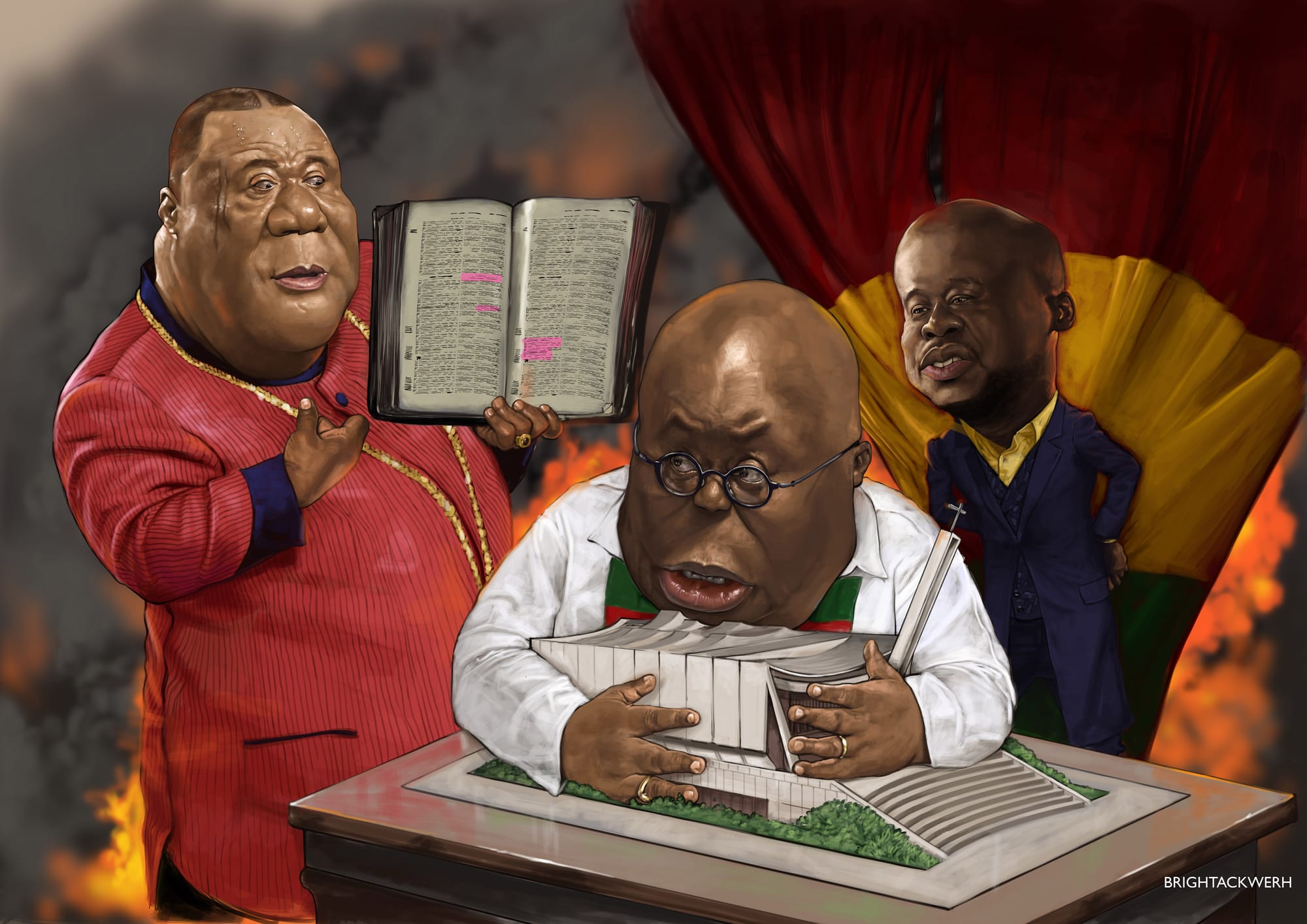
OM: It goes to show how difficult it is to put the truth out there in this day and age – and how important it also is to have the kind of self-belief that the path you're taking will get you to your goal.
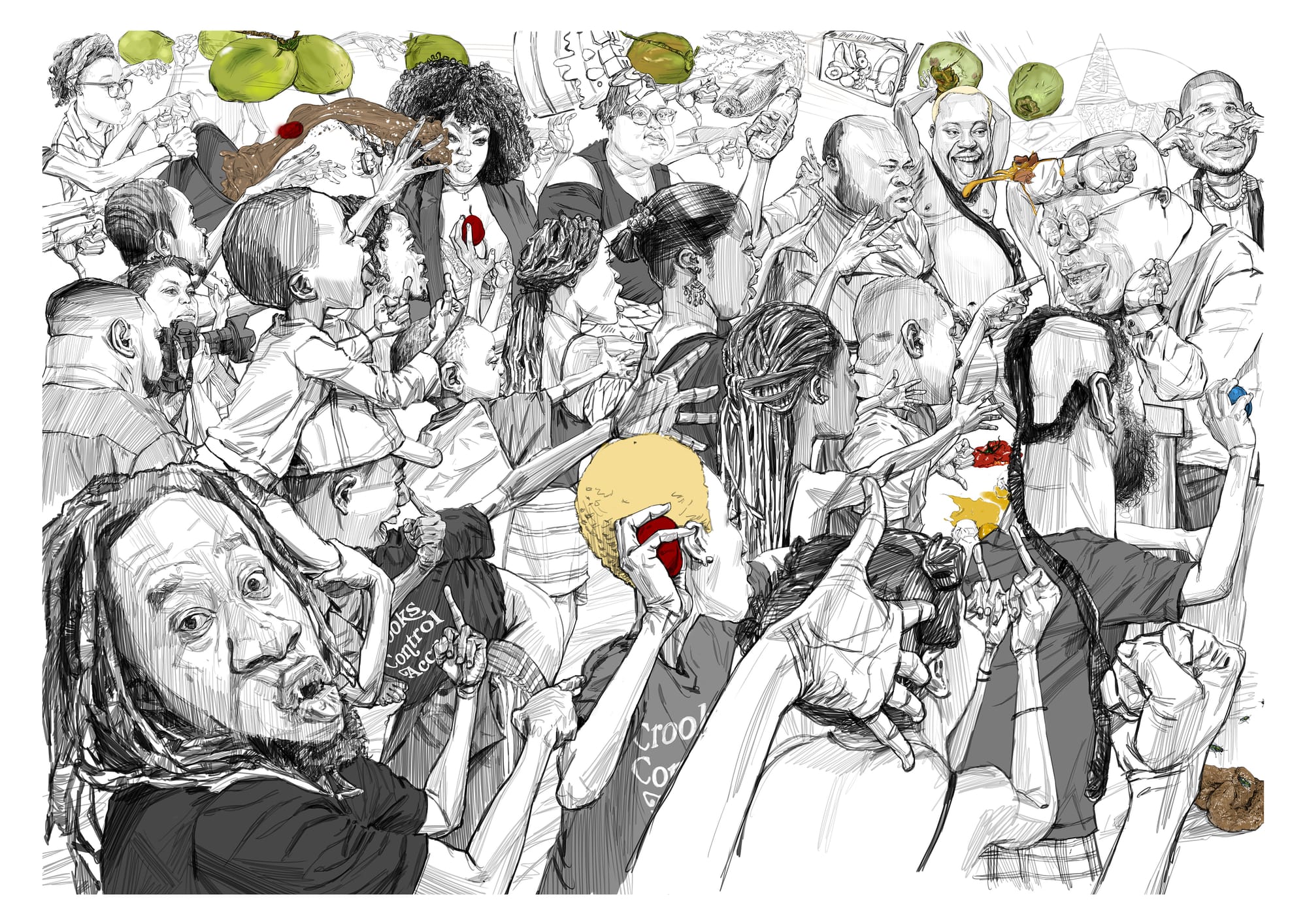
So coming on to the front cover of this issue. What was it like to work on ‘Apocalyptic Dreams Yield Everlasting Nightmares’?
BA: Yeah, this one. I mean, the work really started for me as soon as you sent the brief.
When I take a project on, I read the brief and marinade on it before thinking on how to connect the different parts to other things I’ve seen. I'm always browsing online to find references. I have folders upon folders of pictures of people, places and objects. I go through these as a starting point.
One of my biggest idols is Kim Jung Gi. Unfortunately he is late now but he was a South Korean illustration demigod who drew the most impossible things. This brief made me think of him and how we could add in a Kim Jung Gi flavour to this front cover.
He made these very complex images with multiple points of view and impossible angles, some that don't make sense logically. As an artist, I have a different level of admiration for him and his talent.
I was taking in all these complex and layered pointers in the brief. This image is for the general public, but still I want another artist to see it and just go “daaamn!”
With my work, sometimes this is something that I consider. I want to make something that is either going to inspire and motivate somebody or totally demoralise them.
One thing that piqued my interest was how to capture texture. With the robot cops, I wanted to communicate the metal with just a line, without even adding colour.
What else did I do… I called my little brother to take photos of my nephews. They’re the models that the little girl protecting the flower is based on.
Obviously, I went online and found images of holy people to find the most interesting and challenging characters.
I enjoy the confusion that comes with twenty, forty, sixty characters. Like I said, I didn't know exactly what it would look like at the beginning but because I was working on this digitally, if something doesn't work, it's easy to adjust.
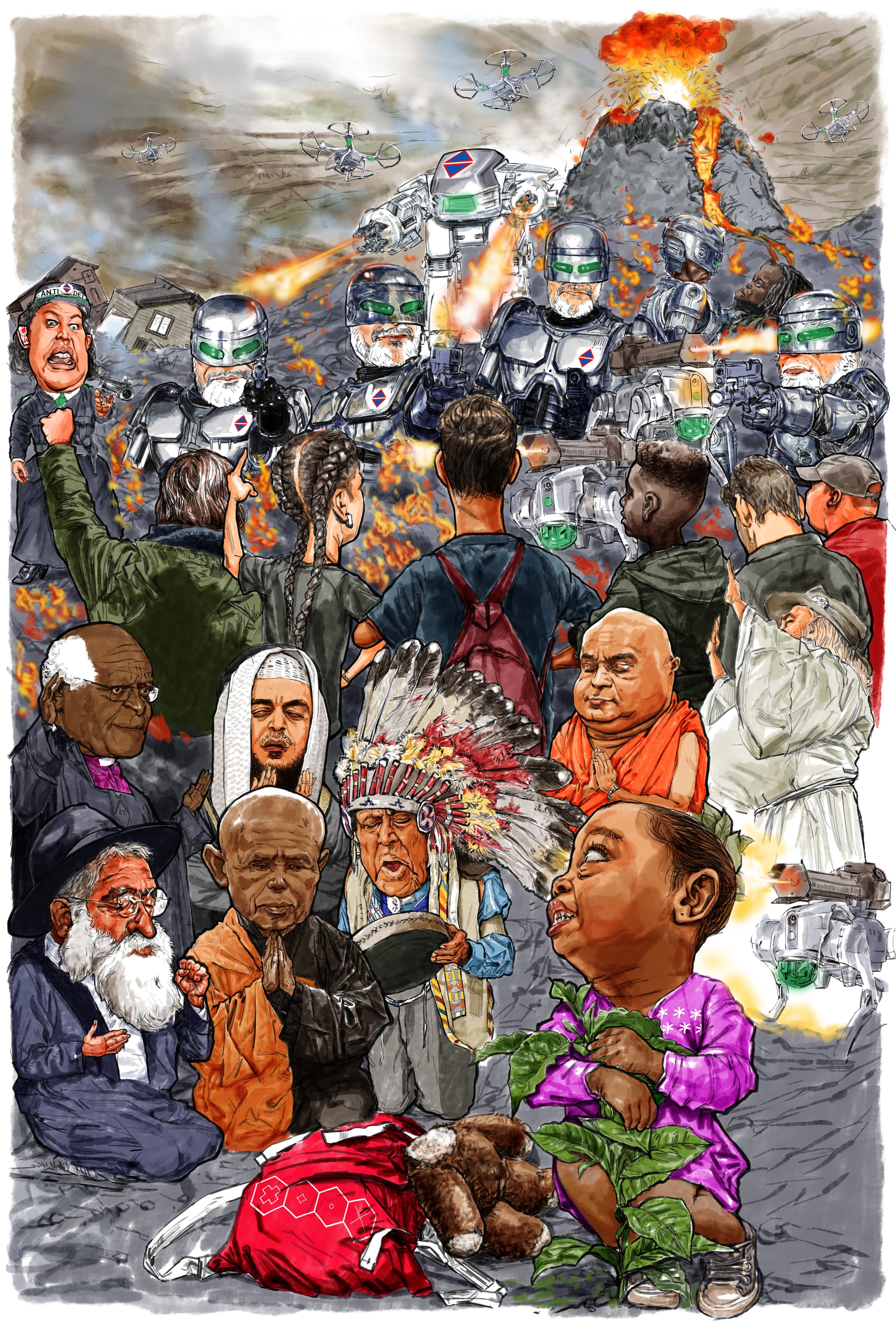
OM: My last question – what did you understand the message behind the front cover to be?
BA: So I imagine that it's just not speaking to one specific incident or event.
There are many different sources: volcanoes from Hawaii. Robot cops – obviously, if I tried to connect it to the movies, it could possibly stand for a certain culture or expression of dissent or youth protest against some kind of militarised state. Maybe you can see that this was inspired by recent happenings across the continent, but it's also very interesting that similar things can be found in so many countries worldwide.
It seems like in our own little pockets that we are fighting the same structures, but also fighting globally. For me it goes back to this understanding that sometimes it's not the people who are the problem, it's the governments.
Everyday people in Ghana, everyday people in Nigeria, probably want the same thing.
You just want to survive and work and make a decent living off of your sweat and efforts. But now the government that is supposed to be your helper, to solve all these problems, becomes another problem that you have to fight just so that you can get back to that initial goal that you have for yourself.
I think it may have to do with over extraction of the world's resources. Again, this is something that we see in lots of places, especially the Congo. The same things can also be seen in Ghana and with the oil in Nigeria.
Going back to the point of militarised state, it’s as if the policemen in all these places are some kind of robots who can’t think for themselves and are under some kind of hypnotic control.
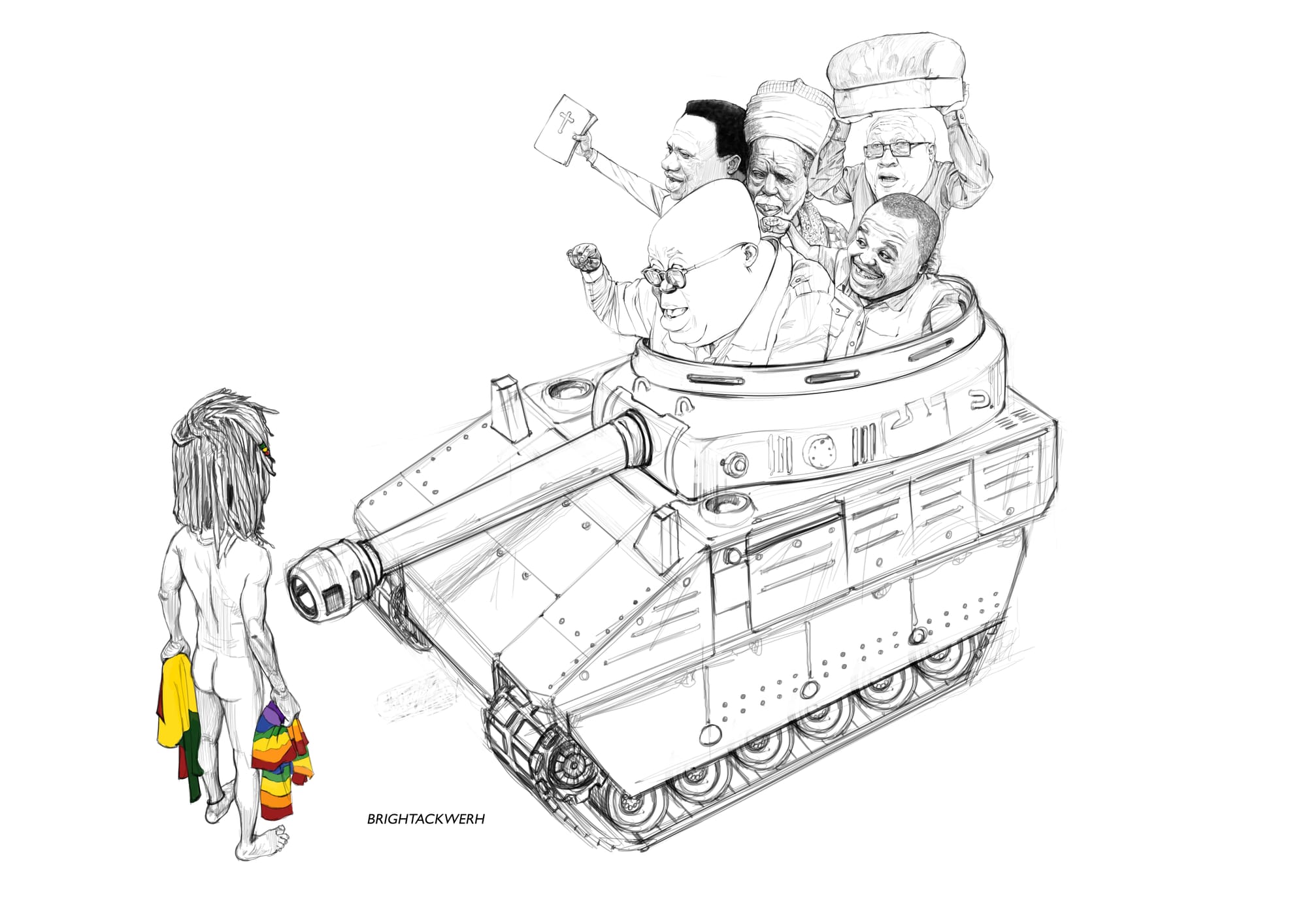
What else… If this was about Ghana, we would find the religious people on the side of the government. So they wouldn't be praying for the young girl to save the last little piece of green or vegetation that you call life.
Here, the case is that the state and the religious police are united as one. So when they seem to make some stupid laws the pastors – who obviously received their envelopes – will be in church telling the people that ‘it’s not nice to insult public officials. God will solve this, give this over to God who will solve it for you.’
For me, this is an overall expression of sadness that the police are really not there to protect the people, but to help the state entrench its position and secure its resources.
This includes the young Kenyan woman – seeing this anonymous woman stand up against the police was profound and her actions inspired people far away across continents. It's good because I think it's one of the ways that you can inspire people to do more. When I saw that video, it said something to me.
Even though she was fighting for her own cause, she inspired those fighting something else far away – so that they can also become more of themselves.
OM: You know what was funny about that? We all saw her on social media and then a week after the video disappeared. Eventually another week later we found the thumbnail on YouTube, we clicked through and the footage wasn’t there. Everyone who saw her felt that same feeling, then she disappeared. It speaks to the time that we live in.
BA: Call it state-sponsored amnesia. This is why it falls on the artists who have the technology to immortalise and spread these moments.
Even if some state-sponsored agency takes this thing off the internet because they know how inspiring or motivating this can be to the people, it is now our job to carry that moment on in song, in painting...
It means so much more now in the annals of history to see this young woman challenging the powers that be rather than whatever fancy images hang in galleries – art about nothing that will fetch you dollars today but are culturally irrelevant.
OM: Bright, thank you so much for this conversation and the chance to work together on this front cover. Today's my birthday as well, so it was kind of cool to talk with you.
BA: Thank you, it’s been a pleasure, I enjoyed this. And happy returns, mine is also in a couple of days.
OM: Whoa, no way! Beautiful – let's stay in touch and fantastic work again.
BA: Thank you, peace.
Follow Bright Ackwerh: @brightackwerh