
There's Rice At Home
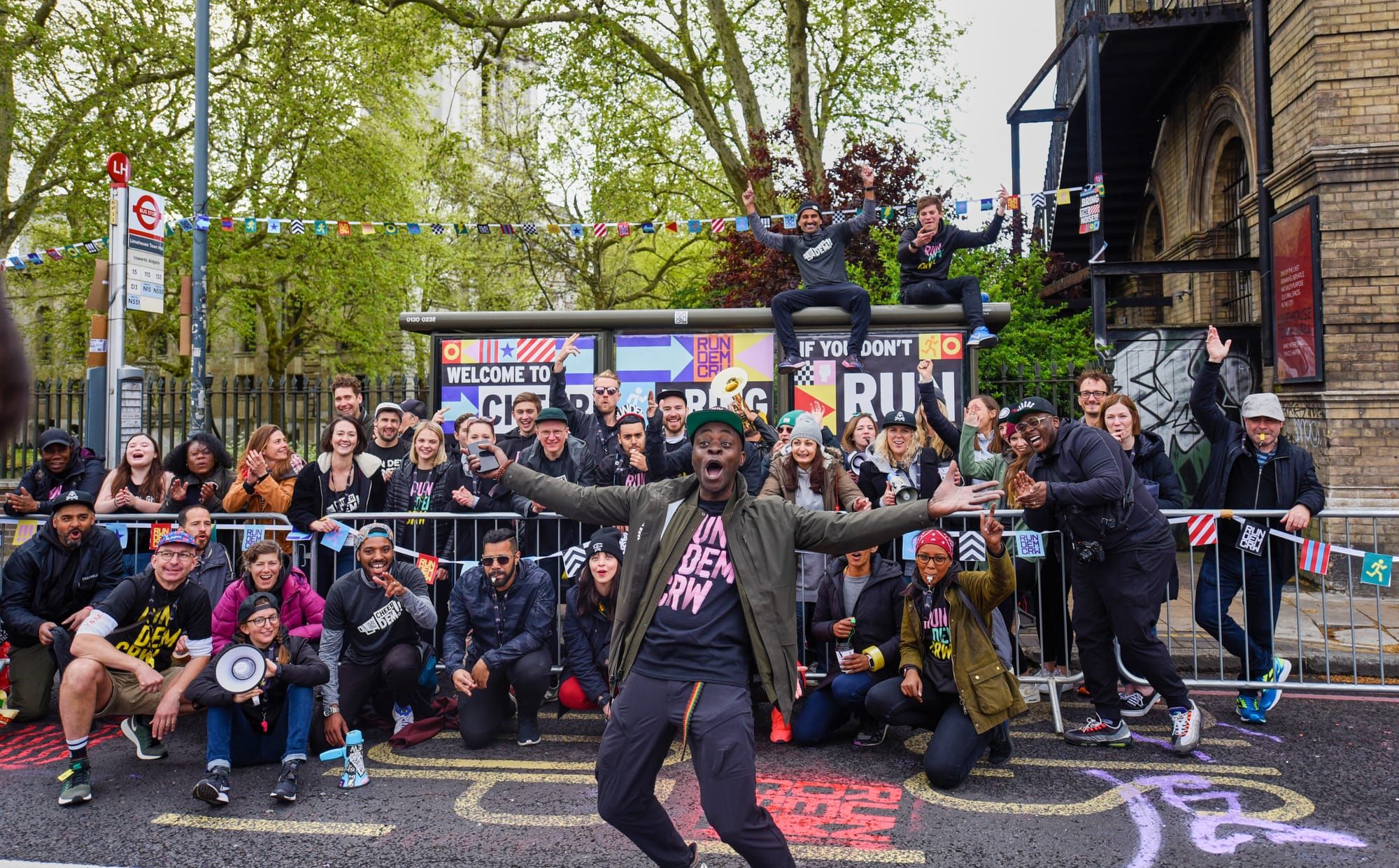
Since 2007, grassroots running collective Run Dem Crew fuses fitness with art, music, fashion and exploration of London. Founder Charlie Dark MBE (he/him) shares his experiences building, holding space for – and safeguarding – community and creativity with Obi Mgbado (he/him).
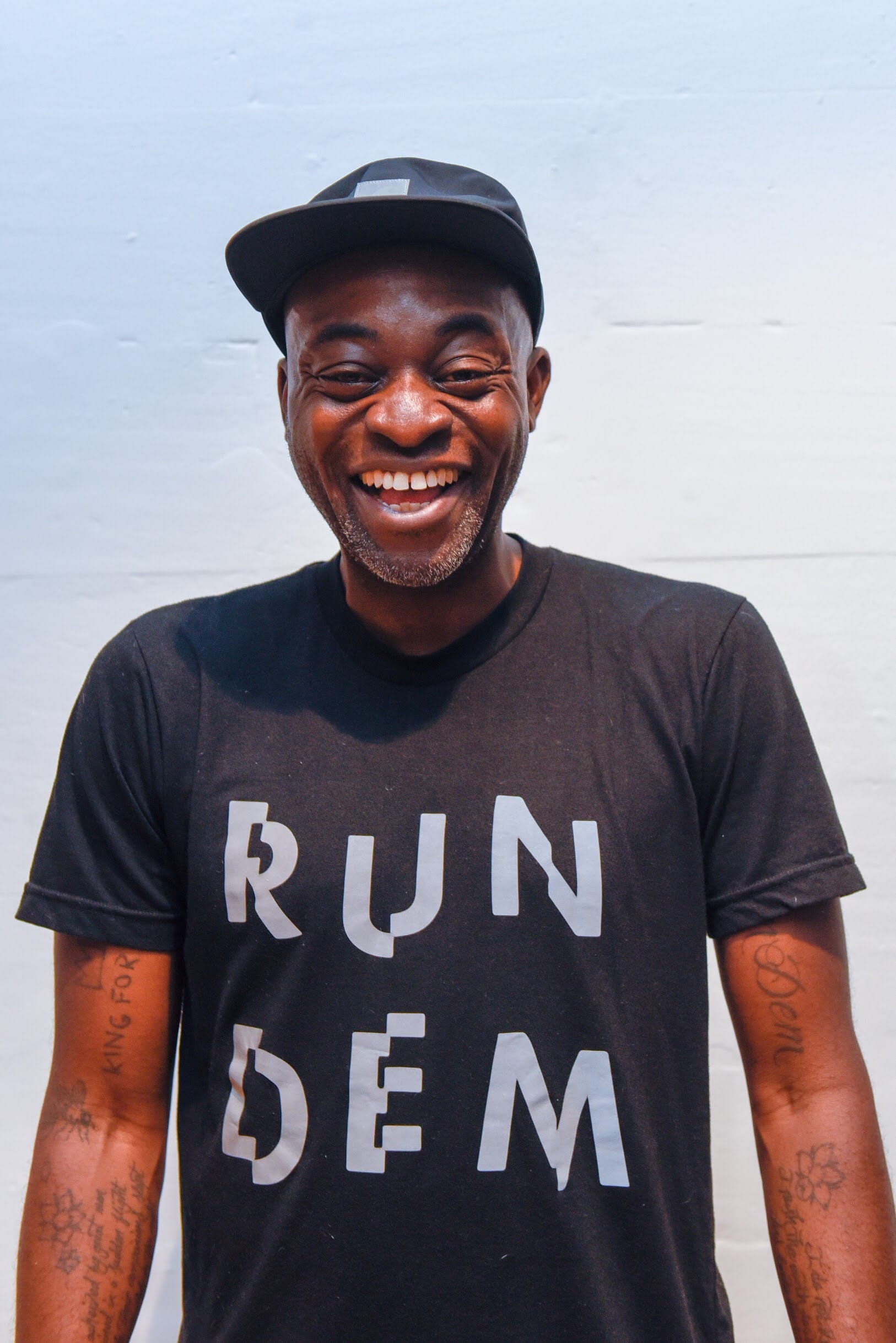
This article features in The Quick + The Brave: Paper Zero ‘Advocates + Allies’ out now.
Order yours from our shop on Ko-Fi today.
Charlie Dark MBE: Hello, good morning. How are you?
Obi Mgbado: Good morning, I'm doing good, how are you?
CD: I'm doing good, thank you. That is a nice smile to wake up to, that is a Black man smiling. I am liking that!
OM: Thank you, appreciated! So, Mr Charlie Dark MBE, first question. Nineteen years ago you founded Run Dem Crew. What were your early motivations and why did you feel the need to start?
CD: I started Run Dem Crew because I fell in love with running, running culture and the positive impact it was having with my own life. I thought it could really help my immediate friendship group and other people in need in the music industry that I was part of at the time.
I’d arrived at a point in life where I was really disillusioned. I felt like I'd completed a video game, I was successful within the industry, I had all of the material trappings that come with success and I was unhappy and felt an emptiness.
What I didn’t realise was that my mental health was really poor but it wasn't something that I'd ever been in the space to discuss. Back in 2005, 2006, 2007 no one was really talking about mental health – it wasn't a thing.
I didn't enjoy the process of taking prescription drugs to manage my mental health. For me, it felt like I was being passive in my recovery and I wanted to be active in it. Originally I started running in a quest for fitness then realised that it was something that could also help to recover my mental wellbeing.
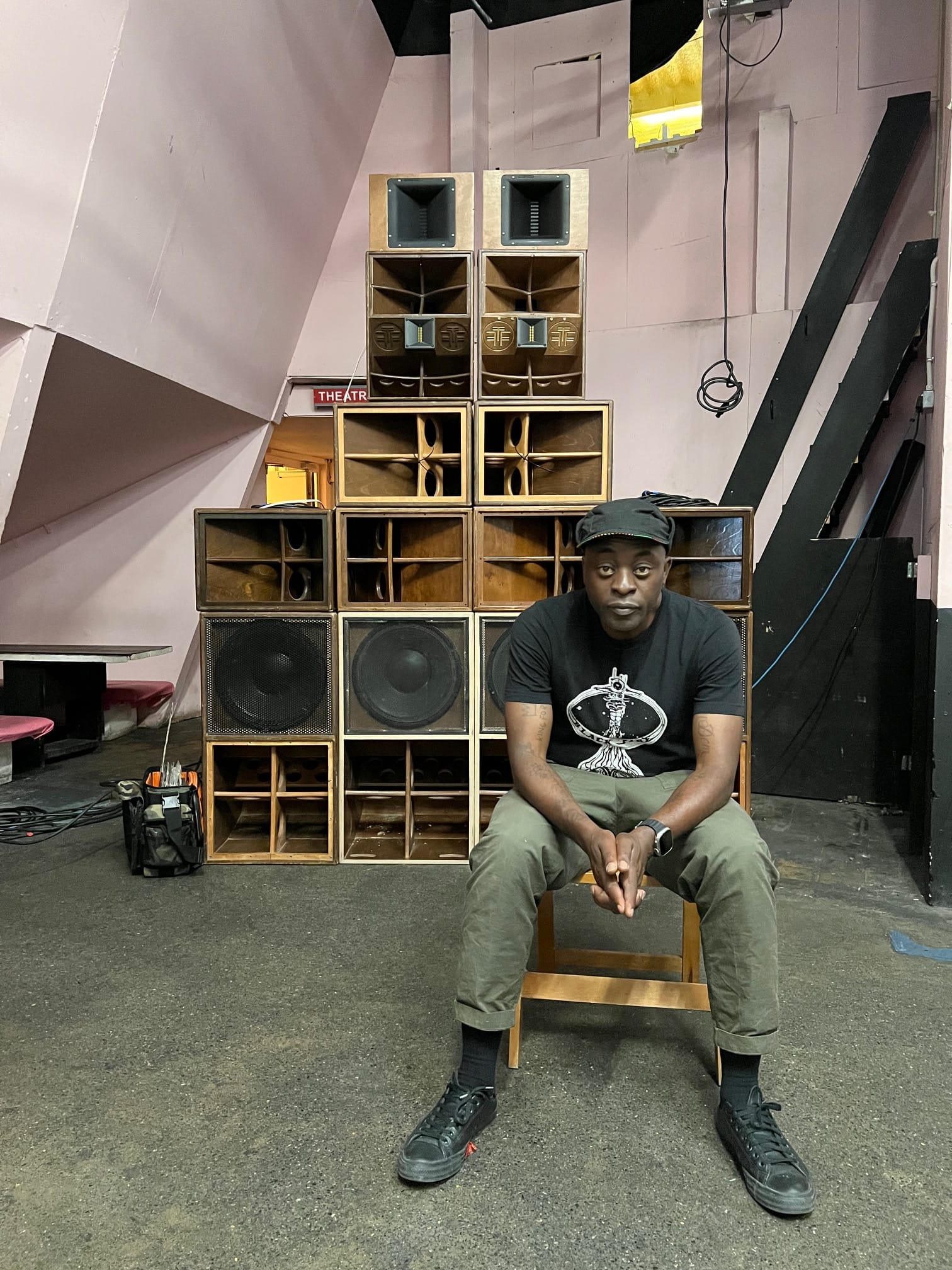
Secondly, I was doing a lot of youth work in schools, prisons and young offenders institutions. A lot of young people I was meeting were landlocked by their postcodes. That period was the beginning of the postcode wars. It was fascinating for me because I grew up in London at a time when there were only four areas: North, South, East, West. It was a case of you’re from Lewisham or you’re from Southwark, you know? You were from a borough. Then it became areas. Then postcodes. Then streets.
Suddenly you're meeting young people who at sixteen years old who’ve never been to Oxford Street. I would say “what are you talking about, don’t you want to explore your city?!” And they’d explain that “it's not safe for us to do that”.
Using running to safely transfer groups of young people from one area to another was a big motivator.
The third is that London at that time – particularly in East – was going through gentrification ahead of the Olympics. This big sporting occasion was arriving on our doorstep and whole areas were changing.
Friction was mounting between the original residents and new people coming in because they hadn't learned how to be with each other. Many times it was the first time they'd ever encountered people who were different from them in that way.
So you're in Hackney and the house you bought for£10,000 back when it was the slum in 1970 is now worth£1.5 million. Parents are selling up and going back home leaving the kids to fend for themselves in an area that’s changing rapidly. Your next-door neighbour who bought the house, done it up, took down the net curtains and put up a 60-inch TV is now telling you that you can’t sit on their wall anymore, even though you grew up sitting on that wall.
Run Dem Crew allowed us to bring different groups of people together to celebrate their differences and explore their similarities in an informal moving mentoring classroom.
The whole idea’s based on a warehouse party, assembling the best party that you can with lots of different people coming together to help each other to be the best that they can be.
I felt that running needed a remix in order to reach more of the people who could benefit from it most – that's how the project started to unfold.

OM: When you began to explore running culture and fitness, how did it affect your clubbing community?
CD: When you start these projects up, you almost have to cast members. So we had one guy who was a photographer – it's 2007, no one's running. Without a photographer, no one would believe that we actually did it.
Another guy was a dancer so he knew about his body. I didn't know about my body. I was just in mine but didn't know how it worked. Then you need the music man – the guy who’s gonna bring the fresh mixes each week. Then you need the enthusiastic guy who just says yes to anything – you need that person in there.
I set up Run Dem Crew particularly for my music community and they've been the most reluctant people to join. It’s partly because in the music industry there's a large amount of impostor syndrome.
It's an industry that's changed dramatically over the last couple years and people don't necessarily like to be beginners. Running requires you to start as a beginner – that's very hard for certain people to get their head around because it asks you to be vulnerable. Many see vulnerability as a sign of weakness that’s often exploited so you rarely see that side of them.
OM: Before you found your passion for running were you doing any fitness?
CD: I've done a bit of judo in the 1990s and I ran at school but I hadn't found my sport. Most people in the music industry, if anything, were playing football but there weren't many people running.

OM: What was that like for you at the beginning? How long did it take for you to get to where you are now?
CD: It's been a nineteen year journey to get to where I am now – my relationship and approach to running have changed a lot. When I first started, I was looking at it through the lens of performance and connection. We were coming into an industry that didn’t reflect the people I was rolling with. It felt like if we didn't prove that we could do it well, we’d be laughed at.
We went marathon heavy from the very beginning which was actually a good thing because we accelerated quickly. We were soon competent enough to take part in events and show people that we were the real deal.
The reason I chose the name was that I knew at some point we were going to have people who start placing races saying “... Serpentine Men’s Club, Victoria Park Harriers, Run Dem Crew… who are those guys?!” The name had to stand out.
I’d say it took six months to get consistent with running. At the same time, I was in rehearsals for a one-man theatre show called ‘Have Box Will Travel’ about the genesis and implosion of my music career and the birth of my first child.
I played 30 different characters and, arriving on the first day of rehearsal, I had no cardio. My director said plainly that I had to start moving otherwise I wasn’t gonna survive rehearsals, let alone a UK-wide tour. It was another catalyst to get moving.
At the same time, the first casualties of the music industry were starting. People I went to school with, people I knew from clubs and worked with were suddenly dying. It came as a big shock and a big wake up call that if you're going to get through life, you need to have some cardio. I threw myself in head first.
Christmas Day 2006, I went out for the first time. I thought to myself ‘I've got this big trainer collection, one of these trainers must be good for running’. I lasted ten minutes. I felt embarrassed, very, very humbled but alive. It was amazing. It filled the buzz that DJing had stopped giving me. It didn't require a team, a crowd or a venue.
All it required was me.

OM: So you were alright going out by yourself at the start?
CD: Yeah because I didn't want anyone to know. This was 2007… friends aren't saying, “let's all go out for a run, let's go to the gym or for a walk”. Social media was barely a thing so it's not like you could suddenly tap into other existing communities because you didn't know they existed. It was the Myspace era, you know?
I heard about a guy in New York who was doing a similar thing and reached out to him. Turned out that we had mutual friends then suddenly we started to discover these other groups around the world, unaware of each other. The seeds for what we have now started to be planted.
OM: What kind of advocates did you have in that period? Did you have support from other people who helped to guide what Run Dem Crew would later become?
CD: When I first started it was just me. It was just ideas from my head coming out. Along the line we were introduced to Nike and went on to work with them for nine years.
I had a friend who already worked there called Acyde. He's in Kanye’s camp and was in Virgil’s too. He's now a tastemaker in LA doing his thing.
At the time he was at Nike. We were talking one day and he was like “you know, we're really looking to do projects around community” and I'm like “well, you guys don't know any community, I live and work in the communities and I've got this project that I’m bubbling”.
So we started hooking up and working. Through them we met a design agency called Rosie Lee – they really helped us shape the visual language of Run Dem those first nine years.
Basically, I had found a group of people that I could share ideas with, they’d interpret them in a way that was greater than what I expected. The graphic designers really helped shape the vision.
We met hardcore runners who had fallen out of love with traditional running clubs so that helped progress the performance side of things.
We started meeting more and more people. Chakabars was a member of Run Dem Crew. What we started to do was help other groups with their brand relationships. We introduced Spartan Fam to Nike who started doing stuff with them too.
It wasn't a thing like “I've set this thing up and now I'm an island”. It was very much, “I've set this up, let me help you set your thing up”. It was all open source and always has been.
Brands started to wake up to this thing – the Olympics are on their way. Everyone's trying to establish a foothold in sport so we had very good timing and it started to work.
We worked with lots of different brands on lots of different stuff, but for me it had to come from an authentic place of something that I'm interested in.
OM: What would you say is the difference between a traditional running club and Run Dem Crew?
CD: In my personal experience, running clubs are more concerned with performance. Run Dem Crew and similar organisations are more concerned with community and connection.
I’d also say that we’re more concerned with the intersection between music, fashion, art and sport. What happens on the running track has to reflect our lives. In my experience of running clubs they’re not interested in talking to you about fashion or art or music as it distracts from the performance.

OM: Do you feel like those intersections are what made Run Dem crew attractive to new runners? Were those intersections consciously based on your own tastes?
CD: It's always based on my own taste. The music I've listened to throughout my life has impacted the choices I’ve made, the environments I’ve been in, the people that I've met. Sport in the same way for me has always had touchpoints of fashion, music and art.
It's not just always about performance – what I realised is that sport is seen through the lens of performance in school so people think of running as a form of punishment or a test.
I look at running as a celebration of life, of how far you've come… I don't look at it solely through the lens of performance.
That influenced my take on Run Dem Crew because I was aware that there were people who aren’t going to gel with the performance side but they're going to like the fashion side, the music, art. The more touchpoints, the more likely we were going to attract more people because they fall in love with the running through the love of something else.
OM: So you’re West African, am I right? What part?
CD: Ghana – again this is what I say to brands: “I come from a community – you don’t”.
I grew up in community. I was disciplined by aunties, uncles, extended family, people like that – it's very different. You know, I eat with my right, I don't eat with my left. When I'm putting these communities together, they're very much based on the communities that I've been part of, not fabrication. They're built on roots.
When you go to a Ghanaian family christening, at some point you're going to be sat next to your elders who are going to give you a life lesson. So we have that as we're running – it’s particularly attractive to people who are new to London or an area, who don't come from community. All this at a time when social media is rearing its head to become even more powerful and distracting.
Run Dem Crew was simply this idea that once a week on a Tuesday for seventeen years I hold space where I can see you. A space where you can be seen, celebrated and welcomed. To me, that is a powerful thing. It's not about any of the trappings that come with doing these types of projects. It’s about people needing these types of spaces to gather – particularly after the pandemic.
I'm a nightclub DJ but do I want to be in the club at 4:00 in the morning? Not anymore, I'm not interested, I've done that. Running is a tool, a medicine that empowers you, gives you confidence, teaches you about community and connection. It gives you opportunities and reignites your curiosity for life. You're surrounded by positive people in a city that can be quite lonely at times.

OM: Do you consider yourself an athlete now?
CD: (chuckles) Yeah, I do. A street athlete, definitely! I think, at the end of the day, no one really needs to run a marathon. But it's a good experience to have.
OM: How many marathons have you done?
CD: I've lost count… but you know, the thing is they’re a journey. They’re a celebration of life. You don't look at it as being a test but as a project. 16 weeks, 24 weeks. Let's go in. Let's work towards this date and let's go and celebrate how hard we worked with 5,000 people shouting your name, who all want you to finish. How positive is that?
It's good to be able to have a 5K run in your locker. You can run towards the ones you love, run for survival, run for food… Transport goes down, you can walk to work. Late for the train, you can run upstairs. Basic stuff.
A lot of times, people will lean towards the easiest way of life but sometimes you have to do things just to keep yourself sharp. Particularly as Black people, we really need this.
OM: Are you the first in your family to do sports? Where did the motivation come from?
CD: Yes, I am the first as far as I know.

OM: How was that received?
CD: Yeah, it was always celebrated and maybe seen as “wow, I don't know how you do it”.
But like many children of immigrants, particularly from West Africa, going to school in the 1970s and 80s invariably what would happen is you might be failing in the classroom but excelling on the sports field.
That becomes a dilemma for your parents because they didn't give up their dreams and move to another country for you to tell them you want to be a professional footballer – when there’s only five of them on TV. These times there’s no Stormzy, there’s no Topboy… Black culture, Black excellence is not seen on TV or celebrated in the media.
I ran and played football at school at a decent level but, once I got to university, music took over and no one else I knew did sports. The only people I knew were into sports went to the gym and I wasn't really feeling that vibe because gyms were scary back in the 1980s and 90s. There was no Soho House (chuckles). It’s mandem in the hood, lifting iron… intimidation abs and body. Running didn't require me to be in environments that made me anxious.
OM: I struggle with feeling insecure and the idea of being a ‘big Black guy running through the streets’ and having people stare. Did those insecurities ever impact you and, if so, how did you overcome it? Or were you always naturally confident?
CD: (nods in agreement) I understand. Well, I was running at night so no one's going to see me at the dead of night. Looking back, I definitely benefited from male privilege and there was a sense of naivety in what I was doing because anything could have happened to me. I was running at like two, three, four in the morning. There's no one on the streets, not even police.
I’d say I’ve always been relatively street smart so if I was running in an area that I didn't know, I’d talk to the homeless people. For example, I’d say to them “this is for you – I made you some food”. Or when I’m going past a club, I'd say, “hello” to the bouncers. So I'm making friends on these routes. The delivery guys I’d see and the night workers walking up, it was kind of exciting. I knew that night people were going to be my protectors.
East London, particularly pre-Olympics, had a lot of large desolate areas. From 2007 to 2012 the whole of East London was a building site, so it kind of felt like a video game like ‘Need for Speed’.

OM: We talking about Victoria Park area and Hackney Wick?
CD: Yeah, Olympic Park, the canal systems, Woolwich, Embankment… we were just making up the craziest routes to run. My thing has never been about running a set route but running to points of interest to explore the city.
There are certain landmarks in London that most people have only seen from one perspective. When you start unlocking a way of getting to that landmark, you see it for the first time in a different way. People's minds are blown.
I was hanging out with black cab drivers learning their routes, what’s known as ‘the Knowledge’, to create circuits to landmarks that no one knows about.
OM: My next question. What does the phrase ‘there's rice at home mean’ to you?
CD: (chuckles) Everybody’s been asking me this. Okay, basically it’s what my mum would always say whenever I wanted to go and spend money for fish and chips on the way home from school like all the other kids in class. She’d say “there's rice at home”, meaning we had everything we needed at home.
When I'm looking at that in the context of brands and companies, it means, “show me the money” because I've got rice at home. I've got exposure. I've got shoes, all that stuff you're trying to offer me in place of money to actually sustain myself.
I understand that the knowledge inside my brain is valuable. I understand that that knowledge is going to help you and benefit your company so please reimburse me for my time because I’ve got rice at home and it's good rice…
OM: Come on.
CD: Seasoned jollof… just waiting for me.

OM: You’ve shared this publicly on Instagram. Where were you mentally when you put these posts together? Were you reflecting on your own journey?
CD: I was observing that there's been a shift in running culture. There's a renewed interest, a second wave with lots of new clubs and organisations starting up.
Not a day goes by when I don't have a brand send me a message request trying to do something in the running space and ask for my time and expertise. Often still not wanting to reimburse me for that time and expertise. I realise I’m not the only one, probably lots of people are feeling frustrated. I'm feeling it with seventeen years of experience.
I feel like one of the OG’s in this run culture movement so every now and again, I like to pop my head over the parapet and spread some wisdom to help people out so they don't get burned. If we have better practices, we can preserve this culture and ensure it reaches the people who need it. There's something about running that makes you a lot less reactive to the cities where we live.
OM: Going back to that, some of the youth that you work and support, did any of them continue to grow with you over these past seventeen years?
CD: A lot of the young people who first started running are still connected with us or started their own organisations. Swim Dem Crew is a group of kids that came out of Run Dem. Mafia Moves is a kid who came out of Run Dem. Out Runners, Check Mafia, Track and Core, Fly Girl Collective… they all came out of Run Dem Crew.
We're trying to build future leaders. There’s a guy called Kia, he came in as a younger at 17 and he's now one of the crew’s co-captains. It's empowering when you're a young person to have an older person recognise something in you.
OM: Did you have anyone recognise something in you back when you were starting out?
CD: Yeah. I had people that I met. Dean Ricketts from the Watch-Men Agency, one of the first Black insight PR agencies. I didn't even know what they did when we met, I just knew that this guy seemed to be very hooked up.
I was in Covent Garden – I bunked off school with friends. Walking past Mary Quant, I see Dean Ricketts with his locs standing in the window and I was just like ‘yo, who’s that dude?’. He looked at me and gave me the black man nod. We eventually met up because we'd seen one another in clubs and the guy just started giving me bits of wisdom.
There’s also Jane Jay, Norman Jay’s wife. I met her in a club in Hoxton Square in the late 80s. She took me under her wing and showed me the ropes: how to get guest list, how to find out about the after party...
Generally, I had people around me who helped me realise the power of placing yourself in a position of being invaluable. When people trust you and they like working with you; when you underpromise and overdeliver, you prove yourself to be invaluable and the work keeps coming in. But you have to tick those boxes. A lot of people don't realise how many boxes there are.
A lot of these people at the top of business, people we admire and look up to, they're all connected. They hang out with each other but you may not see that their wives are all part of the same swimming group, their kids go to the same schools, they meet in the private member's club. There’s a whole network that you aren’t part of.
The playing field is very uneven. You’ve got to give yourselves the tools to be able to navigate the playing field and understand that there are many different forms of attack.
What often happens with Black people specifically is we are encouraged to attack in a certain direction. We’re never flanking, we’re always coming directly from the front and I'm somebody who likes to come in through the backdoor, abseil from the roof, in the building before you even know I’m there. Flying beneath the radar has always been my thing.
I want people to realise their worth. A lot of times we will work with brands in unfavourable deals because it harks back to feelings we had as young kids who felt inadequate. Because our social worth was judged by what we were wearing, the material items we owned. When those brands that were aspirational as a kid suddenly start popping up on your radar, you’re not even thinking about money because you're just like, “oh my God, I've been seen – they gave me a pair of shoes for free, wow!” You don't realise that you’re immediately at a disadvantage.
The most powerful moment of Run Dem Crew was the very first brand meeting. The brand asks me how much money I want and I said that I didn't want money. Everyone started listening to what I was saying after that (chuckle).

OM: Because they knew what you wanted?
CD: What I wanted was a space in a neutral area where people I was trying to gather could all meet, including young people.
OM: Have you ever experienced corporate abuse?
CD: Oh yeah, definitely. I signed an NDA so I can't even talk about it. That's how bad it was. We have been burned many times. But again, the older I get, the more time I spend in this field, the more I expect it to happen so it doesn't affect me.
You cannot get into your feelings when these things happen because it's called the sport ‘industry’ for a reason. It's not the sports family. Same in music… It's the music industry.
If I'm a brand and I see this running boom, I want to be part of it and I've got money so I'm coming in aggressively, sending in my scouts to survey the land and I'm getting deals done wherever I can because there's money to be made. You allow me to pick your brain and you’re not gonna charge me? Wicked, cool, I'm saving money, it's a business. There's nothing that brands do that surprises me.
OM: Yeah, I know the feeling.
CD: I think when we go into these negotiations knowing that, it’s better for us. You don't work with the brand, you work with the person that works for the brand. So it's about your relationship with that person in the brand. If they trust you, if they like you, if you underpromise and overdeliver, you prove yourself to be invaluable. You're golden.
A lot of us don't do that.
We might go in there and ask for a big figure that we plucked from the sky because it sounds nice, but don’t realise the amount of work that you might now have to do to justify that amount. What happens is people overhear that someone got ‘X amount’ for that so we should get ‘X amount’ even though we've only been going for a month.
People don't understand this thing about elders and youngers... It’s different. If I go to my family house, I'm not taking the biggest piece of chicken with my left hand. I'm not doing it. I know my place. I know my time will come if I’m patient.
OM: With so many companies looking to cash in, sniffing around and gathering info, how do community initiatives avoid corporate abuse?
CD: I think one of the first things you have to do is establish firm roots by yourself. This is why I’m saying to people stop starting projects because you want brand association. You're immediately on the back foot because it’s the brands that are able to then make the first move.
I incubated Run Dem Crew for a good six to eight months before anyone even knew anything on a brand level. By the time they came, it was already established. It's like throwing a party. If I'm already doing the party and people are already coming, it makes it easier for me to promote when I move it to a bigger venue.
Identify your brand values both individually and as a collective. Many people don't know what their brand values are. If BMW emailed them today, they’d say, ‘yes!’ If Mercedes emailed them tomorrow, they’d say, ‘yes!’ because they don't know their brand identity.
Be clear in your manifesto about what you stand for. When people know what you stand for it's easier for them to know whether you're a good fit then you don't have people just randomly emailing you.
You don't need the brand to do what you're doing. When I partner with brands, I'm trying to do something that I can't already do by myself.
Whether it's bigger resources so I can do bigger projects, or amplification of my message, it's not just because I want some free stuff. And it's not because I want to come back into the hood like, “yeah, man, didn't pay for these”.
OM: (chuckles) That’s very clear. How do we honour the hard work that running crews have done before free kicks and social status became the new currency?
CD: Well it's always been a currency. It just got to a point where the OGs started turning it down but the new people coming in are accepting it. There's nothing happening now that hasn’t happened before, even before run culture. It was the same in the 1970s and 80s running and jogging renaissance – this is just the latest incarnation.
From a brand point of view, I always say to them to integrate yourself into the community that you want to partner with. Really try and understand what makes them tick and what their needs are and how you can empower them.
If you create a community that has a strong brand association and that brand goes silent, say because of the pandemic, now that community is floundering. We have to be able to empower the community and that means every single member, not just the leader.
For communities themselves, make sure you're working with the right brand. Seek long term relationships rather than smash and grabs.
OM: How many people do you need to start a run crew?
CD: Realistically, I'd say you need five. Five means if one person doesn't come you’ve still got four. Two people don’t come then you’ve still got three.
If I were growing Run Dem Crew in today's climate, I’d have thirty to fifty runners as my maximum of hardcore dedicated people. When you’ve got 500 people coming to a run – and you start getting into brand relationships – you're immediately going to have fragmentation. They're never going to be able to provide enough product for everyone so then the cherry-picking begins of who gets what. Things become unmanageable.
At its biggest, we had 250 people a week coming to run. What you then find is that certain areas where you could run through freely, you’re now being kicked out. The Barbican don't want to see 250 people storming through their million pound flats, they’re not interested. We also realised that the bigger the group, the people you really need to come don't come anymore because it's too intimidating.
OM: Because you've had to work with and deal with lots of different types of brands throughout your career and had a lot of experiences, I’m curious to know what active allyship looks like to you?
CD: I think active allyship is definitely people who listen. People who recognise the power of what you do. Because again when we’re talking about the run space, some of the people that we've managed to convince to start are the most difficult people on the planet to convince to do anything… the most stubborn and the most sceptical.
We’ve managed to convince ‘mandem’ like, “... man’s going for a run” (chuckle). I mean it's crazy when I look at the boom now. These are the kids who back in the day would say straight, “I am not running anywhere”.
OM: “... Running? What am I running for!?”
CD: Also the women you see running now within the black community, people I see running from the hood. I'm like, “wow, that's really amazing”.
Being a great ally for me means you’re listening and you are actively doing everything in your power to partner in a balanced way with me to empower me so I can have the same privileges as you. That's what I would say is my take on that.
I'm not interested in performative people and performative nonsense. A good ally is someone who's prepared to be vulnerable. Because if we're talking about race, it's the very nuanced conversation that requires people to be vulnerable, to not get caught up in their feelings. Otherwise nothing changes.
OM: What's an old school rule that you still use that you find is just as impactful today as it was back then?
CD: Those who know, know; those who don't know will know when the time is right. AKA my old school rule is always “what would Biggie do?”.
OM: Why?
CD: Because he was an amazing storyteller, a really great observer. He had presence and an aura about him that made me think he wasn't reactive – even when he was beefing 2Pac. To me 2Pac was being reactive and Biggie was just calmly stating facts. I try to move with that kind of principle.
If anything, old school rules are ‘fly beneath the radar’ which is really my thing. We've been taught to believe that the loudest, flashiest person in the room is the most important when actually you don't know who the gangsters are in the real old school rooms. You’ve got no idea.
Of all the people that I've met who really have ‘the thing’ are very understated in the way that they move. André 3000's like a ghost, man. Same with Herbie Hancock, they're just like ghosts. They're not in the room being loud, they’re very calm. You're super excited like, “oh my God, I’m meeting Yoda!” And they’re just like “hush child, be calm” (chuckles). I mean, it’s star power.
OM: For my closing question, in 2023 you received an MBE for outstanding contribution to fitness, wellbeing and mentorship.
Regardless of where people stand in terms of their opinion of the Establishment, it's an undeniably huge achievement to be recognised for those efforts. Your grandfather received an OBE and that inspired you to reach for these great heights.
Did you feel apprehensive accepting the MBE based on the current socio political climate knowing that a number of POCs have rejected the award?
CD: I definitely felt apprehensive but I spoke to a few other people who had accepted. I also thought about my mum and the sacrifices she made – I accepted it because of her.
It’s very easy to look back on our lives now and forget how hard it was in the 1970s and 80s for Black people and people of colour. It was brutal and, as an adult, I look back on the sacrifices my mum made that I wouldn't have been able to do.
I thought to myself ‘if I turn this down, what message does that send to her?’.
She doesn't care about Instagram or the people telling me I shouldn't accept. She cares about the fact that she left Ghana, went to New York then came to London for this dream that didn't happen. Brought a son up in South London, at the peak of South Londonness; got him into the best schools that she could and kept sacrificing to keep him there.
Her father has an OBE and then I want to sit in front of her and say “I'm turning mine down because other people that you don't know have turned down theirs and if I accept it people are going to be cussin’ me on Instagram”.
The second reason was that I was thinking about my kids and this idea of teaching young people how to celebrate their wins; allowing them to celebrate and not bend to peer pressure. Unfortunately a lot of the time peer pressure minimises success: “don't get excited, don’t gas yourself…”.
I don't want to send a message to my children that when you have these big wins that you worked really hard for – and you deserve – that you should say no and not celebrate them.
Third, I totally agree with what everyone says about the Establishment and empire but I also think that when you're recognised like this it allows you into conversations that you were previously excluded from. You’re given an extra five minutes of listening time. For the mission that I'm trying to achieve, it was important for me to accept it because it allows me to get in through the doors that other people can't.
We need soldiers on all areas of the battlefield. Some soldiers are like, “no, I'm turning that down, I'm not accepting it”. Cool, and they go on and do their work and push that way.
Some of us work slightly differently and we do accept… and once we've accepted, we still keep on pushing in this way. We’re all pushing from different positions on the battlefield.
I think if people keep turning these awards down, eventually they’ll stop being awarded to people like us. Then we’re back to the old days and no one's getting a chance to Trojan horse the building.
A lot of us are talking and advocating a lot but we're not in the building. We’re outside shouting through megaphones. I’ve done my outside shouting through megaphones. Now I want to sit in the room and have your attention while I tell you the changes that need to be made… so that's part of the reason why I accepted it.
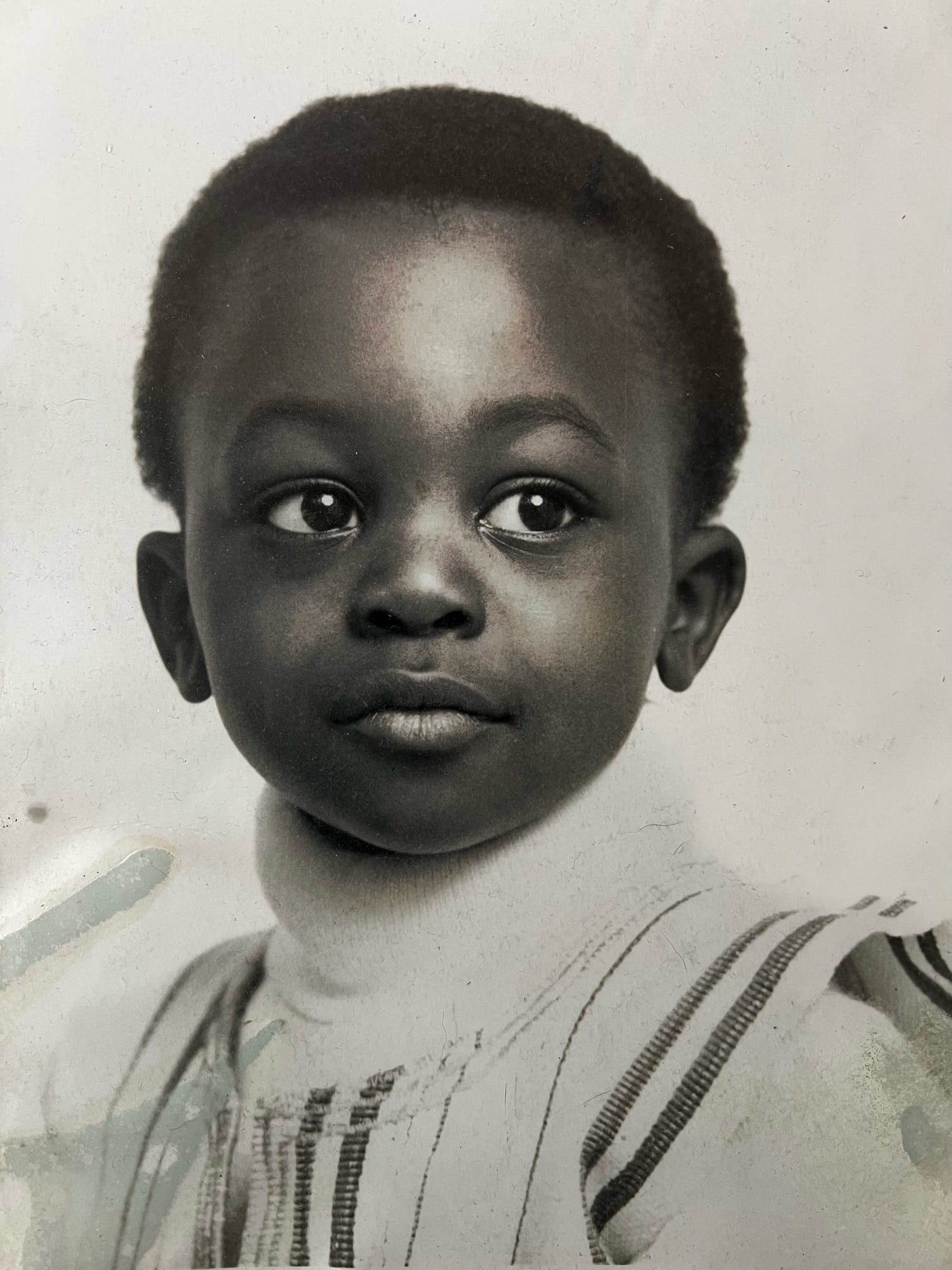
OM: I understand. What would you say to people who were dismissive and wary about the Establishment? Is there a bridge worth building as a community that faces oppression and can there be positive change with such recognition?
CD: That’s a good question. I think there's a bridge that can be made because I don't think the current method where everyone's in a silo works.
There can be positive change from such recognition because there are people who've accepted and who are doing great work. The work doesn't change because you accept it. I don't think the power and impact of Run Dem Crew is lesser because I accepted an MBE.
Anyone who says that is missing the point but that’s their opinion. I’ve got good friends of mine who were like “I can't believe that you accepted”. I'm like, ‘cool’ and I totally understand why people wouldn't accept it and I have friends who haven't accepted. I totally understand why people would be dismissive.
But I'm me and at times in my life, particularly as a younger child, when I was going through hardship you weren't there. You weren't experiencing what I was experiencing.
A lot of people twenty years younger say “if that was me in the 1970s when people were firebombing houses, I would've done blah blah blah”.
No, you wouldn't.
You wouldn’t have lived through SUS, you wouldn’t have lived through the Brixton riots. You wouldn’t have gotten through any of that…
I know there are people who are dismissive about what I do because I accepted the MBE and I'm fine with that because the people I respect and look up to did accept. And I respect my grandfather. He did ‘bits’ so we're keeping the tradition going.
One of my successes has been that I've always tried to do my own thing. I know lots of people, I'm a fringe member of many different groups but I've always tried to forge my own path. I don't allow social media to influence the way I think or the decisions I make because it's not real.
OM: On that note Mr Charlie Dark MBE. You know what, thank you so much for this incredible interview, man. Appreciate your time.
CD: No problem, man, this was an important conversation to have.
This article features in The Quick + The Brave Paper Zero : ‘Advocates + Allies’ out now.
Order yours from our shop on Ko-Fi today.
Follow Charlie Dark MBE: @daddydarkrdc
Follow Run Dem Crew: @run.dem.crew
Photography: c/o Charlie Dark MBE + portraits by Simon Roberts