
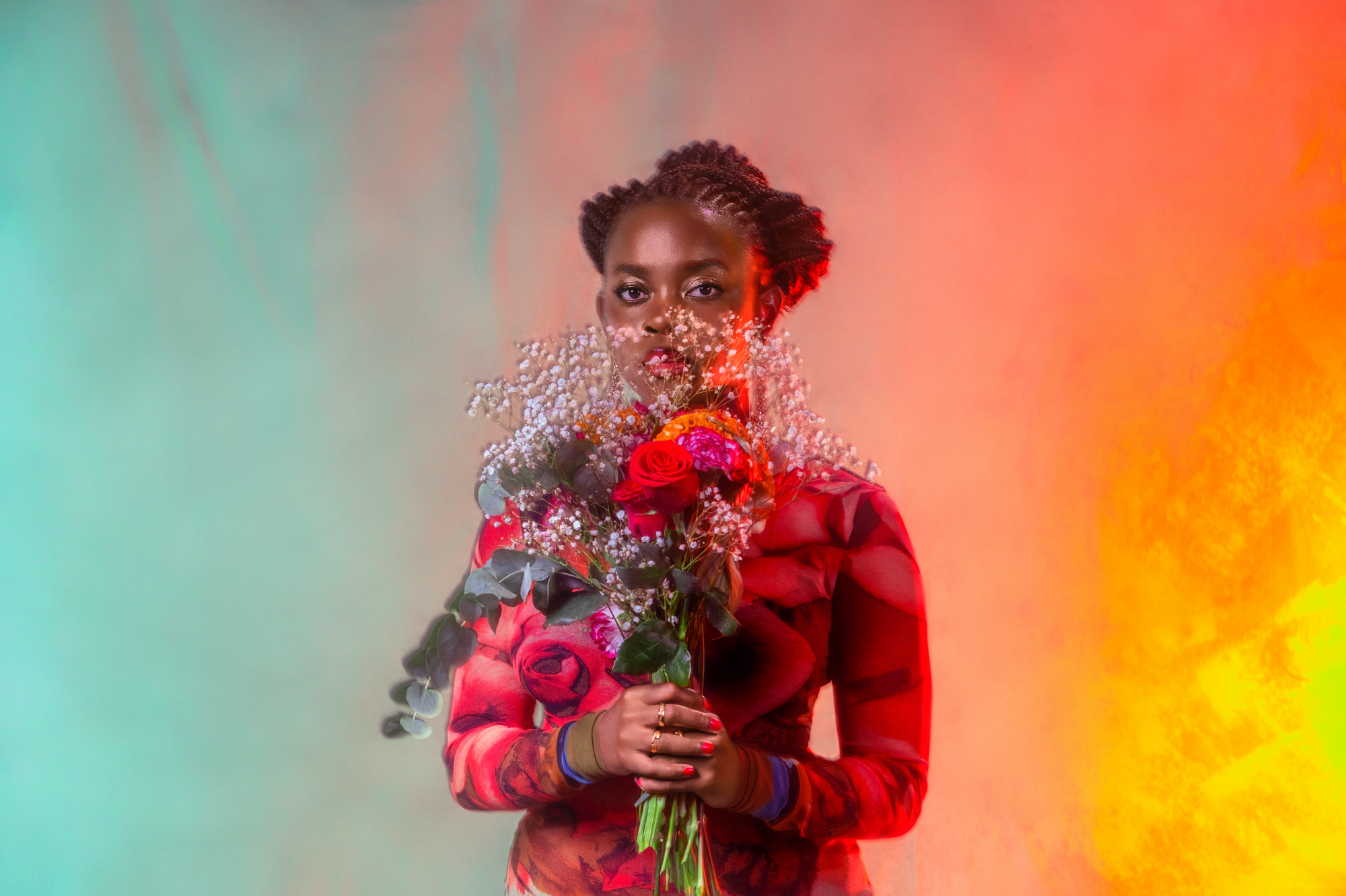
What does it mean to thrive within and embody Black queer liberation? Musoke Nalwoga (she/her), Founder of Pan-African non-profit and art gallery Motormond, talks to Marie-Anne Leuty (she/her) about the process of revolution, intersectional institution building in Amsterdam and how Black queer artistry prevails in the face of conservatism and right wing populism.
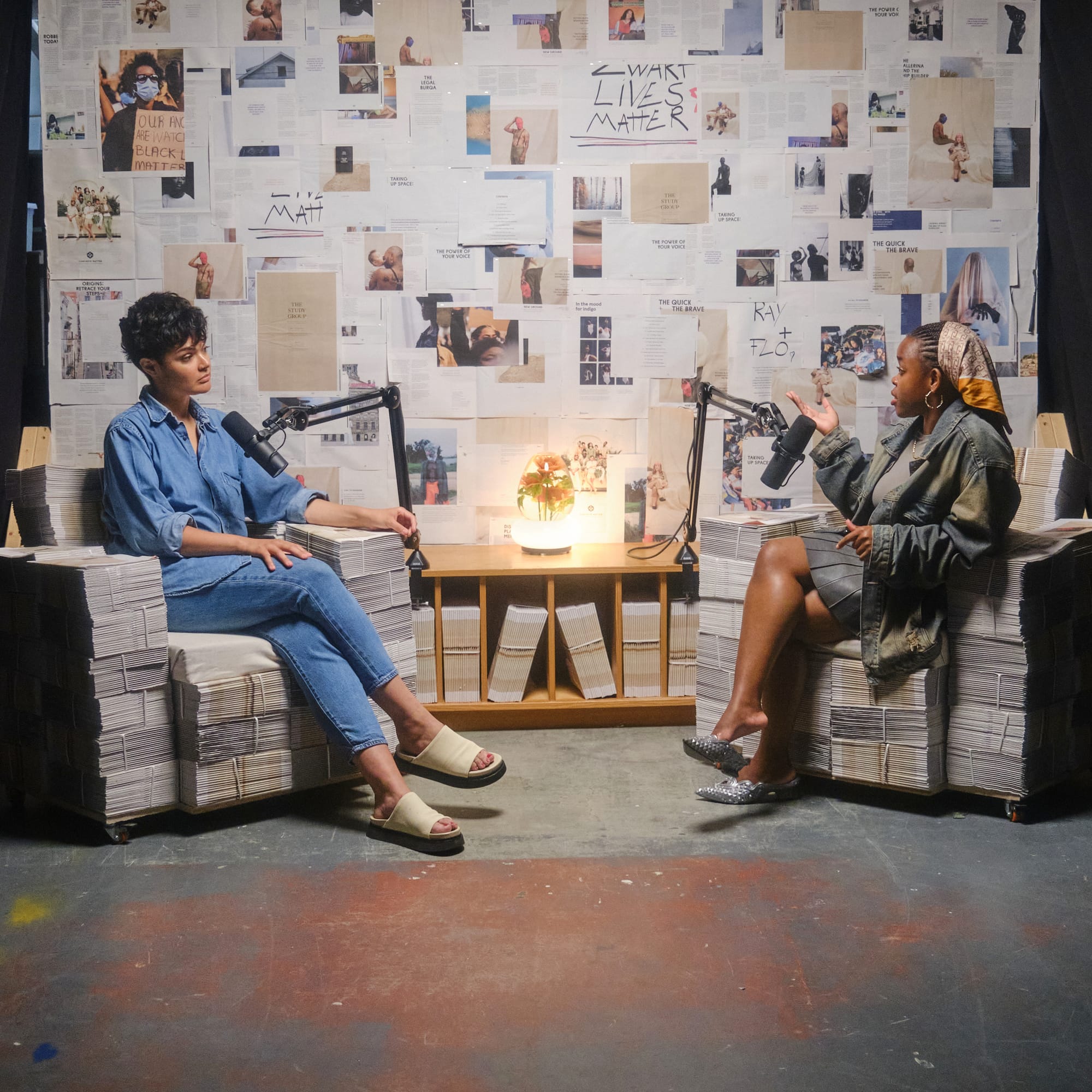
Marie-Anne Leuty: Hi Musoke, thank you for talking with me today. How’s your day going so far?
Musoke Nalwoga: Hi Marie-Anne, thank you for the invitation. I started my day very well, actually. I had a strange breakfast – I had steak and mashed potatoes. I had it for dinner then ended up having leftovers this morning. I woke up well and had a slow start to the day.
ML: I like it, so you’re in a nice headspace already for the first question which is what does queer Black liberation look like to you?
MN: Thank you for this meaningful question. I'm currently working on a show called Flight is Organising Towards Flight at Motormond on Surinameplein in Amsterdam.
This looks at a definition of freedom that argues that freedom and liberation are actually in the process of organising towards that freedom and liberation.There is no reaching at freedom and liberation as a destination – the process of freedom and liberation is in itself the freedom and the liberation.
With Black queer liberation, even before it becomes communal, it's very individual.
I'm currently reading a lot of Saidiya Hartman. Her book, ‘Wayward Lives, Beautiful Experiments: Intimate Histories of Riotous Black Girls, Troublesome Women, and Queer Radicals’ looks at how Black women behaved right after the abolition of slavery in the Americas and how they understood their own liberation.
They did this by performing these acts of errantry: refusing to get married, refusing to take on manual labour, through prostituting themselves, lesbianism and personal acts of liberation.
I also look at somebody like renowned South African singer Brenda Fassie. Known as an outspoken lesbian, she was really an artist.
One of the stories about her that inspired me so much was that she said that she would marry a rich billionaire and bring her lesbian partner – not in hiding – to the wedding. They would dress together and then go to the ceremony where she would marry this billionaire. This was in the 1980s and 90s, so really not long ago.
These practices Black women perform are acts of refusing oppression, or to be undone by a system. With liberation, you have to perform it, harness it, embody and enact it. You don't just fall into freedom – it's an ongoing practice that you cultivate.
I think of Black queer liberation as an amalgamation of these individual acts of errantry, waywardness and self-making and if everyone is equally committed to this self-making, then we can all be equally committed to this liberation as process.
I don't believe that there is a day after the revolution because the revolution is in the everyday, in the minute and the mundane and you can subvert that as you move.
A lot of beautiful people do this. I'm very inspired by Nella Ngingo, a Burundian photographer, artist and model with a refugee background based in Amsterdam. Her recent series ‘Errant Black Girlhood’ which was exhibited at Unseen Photography Festival is really, really interesting.
Somebody else whose practice I appreciate is Patricia Mokosi, a Congolese stylist also based in the Netherlands who pushes the boundaries of what it means to make fashion and to self-make through fashion.
How you assert your own freedom also manifests through the creation of an institution.
Marian Duff, Founder and Director of OSCAM, really inspires me. Simone Zeefuik does a beautiful job with Programming at the Bijlmerparktheater allowing space for deep thinking around Black queer liberation.
ML: The context of the work that you do through Motormond is a formidable example of speaking truth to this as a Pan-African community space with its roots in the idea of collective liberation. At a time when the world is in a flux and shifting towards greater conservatism and greater populism, how does this manifest for you?
MN: This is a really beautiful question because you make it political in a really interesting way.
In 2023, Far Right candidate Geert Wilders gained the most votes in a general election for the first time in the Netherlands.
After decades with a centralist government, now we really have to contend with a leading politic that is directly in opposition to a Black queer movement that embodies the intersections of Black, queer and immigrant. It's really being pushed to the side.
The trickle down effect already shows in how much funding is being cut for our institutions.
Diversity and inclusion initiatives were holding space for Black queer bodies, but even in the streets, I think about how the Black queer body moves through space. How do they come to my institution? How do they sit within the geopolitical frame of Amsterdam? How do BIPOC and queer bodies move through the city?
I'm observing retraction. People cannot take up real estate. We cannot take up literal, material space on the streets.
It all feeds into this shift in thinking to say “let's go and create our own institutions”.
If we think of the Maroons, those who escaped their enslavers, who went into the mountains and deep forest to create communities where they could self-govern – this was and remains revolutionary
0:00
/0:05
But in contemporary society, we've done a lot of this centering for the last four years. It’s all been about inclusion, diversity, Black people, Indigenous people, queer – they must all come in.
Now we are in a moment where everyone is like, “actually, we don't care at all”.
People are being pushed out of institutions. Contracts are not being continued or extended. So what does this all mean?
It means that the Black body was in the institution, but the institution was not fundamentally changed. And what does that mean for this liberation? It could be ours, but it could also function as a disarming tool to the violence of the cis-het white patriarchal systems – if I could speak to the ideas of bell hooks.
When we think about this manifestation of conservatism and populism, it's a cycle. The four year loop we just finished was the ‘Black People Must Exist’ movement. Eight years ago we had this again. There is a sort of retaliation now in the absence of Black curators, artists and workers within institutions.
It's as if people have been suppressing these ideologies and now they’re coming back with a vengeance.
ML: So what is the place of a Black queer perspective within populism specifically?
MN: When I think about populism, it can be co-opted for many things. It can, of course, be co-opted for right wing political movements. But the idea of populism is simply to grab people and somehow easily spread ideas across the masses.
With this in mind, I think that we can also co-opt it. I'm thinking through this idea of almost creating viral Black imagery,
The infrastructure of populism is neutral, right? The idea of holding these things in place, it's neutral in itself. The content that is being thrown in is what's tainted and right wing and anti-Black racist and patriarchal.
But if we throw something else within this system or algorithm, what could shift?
ML: You've had experience of building with allies, finding your advocates in art and cultural spaces. You've also attended these institutions as part of your education and development. How have those influenced your mission to create institutions that cater to the Black queer perspective?
MN: Oh, that is interesting. Oof. There's a privilege here to be sincere, a very big privilege.
I think a Black woman coming up now would not experience the type of privilege that I experienced coming up four years ago.
Back then there was almost like a galloping – everyone would hug you just because you had the qualifications or spoke the language. You filled, not to say a stereotype, but you had a combination of characteristics where they could place you somewhere and that was valuable.
I've been to good schools. I did a Masters in Critical Studies at the University of Amsterdam, which was also very meaningful. I had a wonderful teacher there. I went to Sandberg, which has been very good to me. I resisted Sandberg at first because I started during the pandemic. I did not like the remote learning element. But it was through a teacher there that I got access to the first space for Motormond in East Amsterdam. Funding for research was also available through them.
At one point however, I no longer wanted to be in classes, I wanted to actively engage in my practice. I reached out to one of my teachers who advised that I contact all the Black women in the school, find allies, explain my situation to them and make a strategy.
All these women came together in support and I did not have to be in class anymore because I could turn my institution into my project.
Something I've been thinking through this is who am I, what do I want and how does that desire manifest in the world?
One way I invested in this at the beginning of my career was to take part in a fellowship at Independent Curators International – it was an intensive course where I had the opportunity to return and be mentored in Uganda for two weeks.
We covered fundamental practical curation elements from thinking and curating through to institution building, publication, networking, fundraising, archiving…
From there I was invited for a residency as Motormond – at the time we were cataloguing online at de Appel Archive in Amsterdam.
This was followed by a residency with Muholi Zanele in South Africa where we published a book. I’m currently a Curatorial Fellow at NXTHVN in New York. There’s never been a sense of lack and the journey so far has shown me that I haven't been doing this alone.
As a young person, you know, you have some bravado, a bit of ego. “I'm going to do these things, these are my ideas.”
I was talking about this with a curator friend and they were telling me, “oh, I'm going to curate my desires and write exactly what the criteria are for what I'm going to produce”. A year before they told me that, I had made the same promise to myself. I realised that I was very content that everything that was going to come out was steeped in Musoke. This is who I am so this is what the audience gets, right. And it's a very interesting space to be.
Curatorially everyone should sit there at some point in their career, but it's also a very tiring place.
At some point before your desires are realised, they seem very massive and like they should take up a lot of space. Once I realised two or three of them, I understood that actually, my desires can be co-opted, shared, have space for other desires within them, they can be complicated.
So now I'm at a place where I'm looking for ways of interdependence, ways of working together.
0:00
/0:28
I've been held by so many institutions that I also have this desire to do this, not only institutionally, not only facing the public but to work upon the infrastructures that hold me up as an institution.
At Motormond we’ve been thinking about how we change. With exhibitions or programs being three months, it's like flipping a book, a page of a book. To change that, you would need to change the funding infrastructure behind that.
Currently with funding, you fundraise for a project and it has to be done in six months time. So you research for three months before you do a three month exhibition attached to that. There has to be some type of advocacy going back into the institutions supporting you in order to change them so you can change the front end and to think all these things through.
Now that I've done my desires, I'm very interested in everybody else's desires, everybody else's understanding of freedom, liberation, errantry. All these weird corners that especially Black women have put themselves into. I'm like ‘I want to go into your corner and learn all about your practice, and then I want to stage it’.
From there, we can understand what freedom means to you.
But also, I think it's nice to also think through communities. I learnt so much from Judith Leysner at Sandberg through the Unsettling initiative, a decolonial radical feminist art space within Sandberg. It proliferates and goes into other institutions, it takes up room, it doesn't sit – it's unsettled.
Through this lens I no longer think about Motormond as a small initiative but as an up-and-coming institution that can support other collectives, artists...
ML: It's interesting you say that because with the time and energy that you've invested into Motormond since 2021, you can see how you’ve gone from zero infrastructure and being super grassroots to now shining a light on upstart organisations and collectives also doing this work. What was your initial motivation for starting Motormond?
MN: I like this question but it also freezes things in time. Arguing that there was this like one specific light bulb moment, but it actually wasn't like that.
Motormond started as a reaction to the murder of George Floyd and the hopelessness that ensued. I needed community also within the pandemic. So it started off very DIY. We had no money so anything could happen within this space – there was no intentionality. It was simply a gathering space for like-minded people.
As we moved on, we got research funding from Sandberg which was the first time we were able to imagine what the possibilities could be.
Within our history, these iterations of Motormond need to be archived and they need to be remembered as well. WIth the second iteration of Motormond, I was thinking about who I am as Musoke in order to zoom into a niche.
0:00
/0:02
Initially, there was the thinking to just be everything to attract the most amount of audience to come to you. But I inhabit a niche – born in Africa, moved at a specific age, is Black, is female, is moving through Europe, is settled in Amsterdam. A large group of people share this identity which can then be diluted further. For example, born here to two African parents, is moving around, has not moved around, born to Dutch African parents and so on. These markers of identity shift and merge but the core is the same.
So then I thought, how do I solve that? By giving them myself, giving them my desires. It's very interesting because the idea of the individual and the diasporic still run along these lines at Motormond.
It speaks to this idea of how do we unite while preserving these cultures?
Because there is the fantasy that “we all came from Africa” and we all share similarity, but that's a fantasy.
We all came from Africa and the places we've been to and the ways we've been socialised have created a certain type of culture that can also be archived, staged, presented and circulated.
It shows the breadth of that experience and where commonalities lay.
ML: It illustrates that African and diasporic culture and identity aren’t monolithic.
MN: Exactly. I like to relate back again to Africa, to explore this idea that Africans on the continent are different from Africans in diaspora because we are living specifically separated experiences.
That difference can be valued and celebrated but also learned from so that we can exchange with each other.
Motormond is in perpetual transformation. There's an audience now that we can define – Black, queer, diaspora, and that can be stable. Meanwhile we are experimenting all the time to find ways to sustain, circulate and archive.
We’re in the lab, so watch us every minute.
ML: Were the arts something that you always wanted to use in a political way?
MN: I was thinking about this recently. I have always been a curator, which is something really strange to think about. Since I was as young as seven years old, I’ve been gathering people and writing texts. I was the letter writer of my community’s compound where I grew up in Kampala. If there was a visitor, someone important, they'd come to me because I wrote nice letters and had good handwriting.
I actually studied law for five years. I could not drop it, but I did switch my major to art history and museum studies.
The first years of law are just cramming things. After high school, where you really just take things in and regurgitate, to then do the same thing at university, I was like ‘there is no way this can be it, something else has to be happening. I need to reproduce. I need to assert myself within my education’. It wasn’t going to happen for me in law school. It wasn’t my vibe.
I was already inclining with the people in the art history class. I decided to check it out and it really landed.
Politically, I remember in my second or third year, I was interning for six months at a large museum where I worked with the curators towards a big exhibition. It was a great opportunity to gain work experience.
About a month into the placement they had a poster for an upcoming exhibition with blackface on it. I remember coming to work and everyone being like “so, what do you think?”. I was like twenty years old. Why was I the one informing the entire museum?
I was also the only Black person in the curatorial team. There was one other Black woman in the building who worked in the catering team.
When this blackface poster came through, the community around the institution said unequivocally that it wasn’t something they stand for and could the museum take it down?
The institution’s response was “we stand with the choices of all our artists. We protect our artists”.
I remember thinking to myself, but do you think your artists don't come from the community? So your community does not have any representation in this institution.
From that moment, I felt like I should be standing outside of this institution, not inside. This is a publicly funded institution – why are you racially aggressing your audience? Aren't you meant to be ‘neutral space’ as a museum?
For me, it became political immediately.
I had to switch institutions because, at that moment, I realised that this was an environment where I would be constantly fighting. At the time institutions could move in this way.
ML: As you’ve navigated various institutions, what has your journey been like finding representation specifically as a queer African woman?
MN: It's so interesting because, I would say, around a year ago, I really reckoned with what it is to be mirrored.
Usually it was so at the back of my mind that I did not feel like I needed mirroring. Of course I needed it. But I moved as if I didn’t.
When I was coming onto the scene, even opening Motormond, for me it wasn't necessarily reacting to a lack of representation of myself and not seeing myself in the space.
Motormond came about as a response to battle powerlessness. There was a lot of powerlessness around the killing of George Floyd, especially with that taking place within the isolation of the pandemic.
As a Black woman, it was a very lonely time so I was looking for camaraderie, looking for people going through the same thing and asking “okay, how do we unite? How do we make art together?”
I wanted to be around my friends who are Black queer people. I wanted to find people going through what I'm going through, who are coming from where I'm coming from. And then I wanted to align and compare and share and experience life together in a way.
This mirroring has come very late, you know, and I'm just now seeking it out. I must say I have been very lucky and found many people so it has not been a lonely road.
But there had to be a reckoning to be like, why are you moving in these places?
Even when I was creating the institution, there was a feeling that ‘people are just audiences’ and not reading myself in relation to what I was actually doing, which is strange.
ML: It's almost like a dissociation.
MN: Almost like a dissociation.
ML: Which maybe speaks to the emotional burden of that lack of representation.
MN: I don't even know why it became a therapy session, but yes!
Recently I've been really seeking it out. Last summer, I had two Black queer Ugandan curators come to visit the gallery. And this was the first time I was like, okay, I'm a Ugandan woman, I'm Black, I'm queer. So how do I connect with them? And now I have a few of these people in my life whose experiences reflect back to me.
ML: It’s interesting that the original intention wasn’t necessarily to find representation but now it's actually gone beyond to fully embody how that can look. What does it mean to you to be able to research and curate ideas from this state of grace?
MN: Oh, beautiful, I love this. I think where we are going right now within culture is a place where we need to define ourselves beyond nationhood.
Culturally and functionally we need to belong to larger areas because we are moving to a time when the climate crisis is becoming more and more emergent and we need to face climate events more quickly.
One of the lenses through which the climate crisis is going to be read is this pan-diasporan lens because it does something very interesting.
It spreads.
This belonging to multiple or larger geographies is going to be extremely important because we are going to have to gather and galvanise much bigger groups of people in order to solve these problems.
We are going to have to think beyond the nation. For me, stepping into this pan-diasporan space is interesting because I was born in Africa. I came to the Netherlands at sixteen so I’m still extremely connected to Africa.
Something I'm thinking about is how to continue to do this work in a productive way so preemptively starting to gather people under this title is a good move.
And on a personal level, I want to understand African history. I want to understand where I come from. I want to open up space for other people to also understand this, because I feel like we're yet to see ourselves.
Usually we don't even know the histories of our people. For example, why do you live in the UK, right? I don't know. There are all these personal or collective histories of African movement in space, great migrations of Africans across the world in the contemporary world post-enslavement and post-forced migration by labour, for example the Moroccan migrations in the Netherlands.
What does that migration do, and to which culture? I'm very curious and excited to be part of this knowledge or history discovering.
ML: Archives of these personal histories feeding into this larger collective idea of diaspora is a beautiful thing. What’s on the horizon for Motormond?
MN: Oof, radical, radical changes.
I'm not stepping down but I'm inviting other Black, queer curators to come and take over the space which I'm very excited to facilitate. I’m looking forward to seeing where this goes as we move towards radical space holding for other institutions.
Then we also have roots to pan-Asian and many other small grassroots organisations that are going to be part of our public program, so our space will be used for practices and meetings.
Of course, we are very niche, but within that we cannot serve the 360 of the Black queer niche. So we look at the other proliferating institutions, initiatives, collectives on what their thoughts and takes on institution making and community building.
We've been lucky enough that the fundraising infrastructure actually supports this type of collaboration. So, yeah, we are quite excited to enter into this new mode.
ML: Musoke, this is great to hear. Thank you for taking the time to share your insights, we look forward to hearing more from Motormond.
MN: Thank you for having me, Marie-Anne, it’s been a pleasure, I can’t wait to see this grow.
Follow Musoke Nalwoga: @cyborgtruffel
Follow Motormond: @motormond
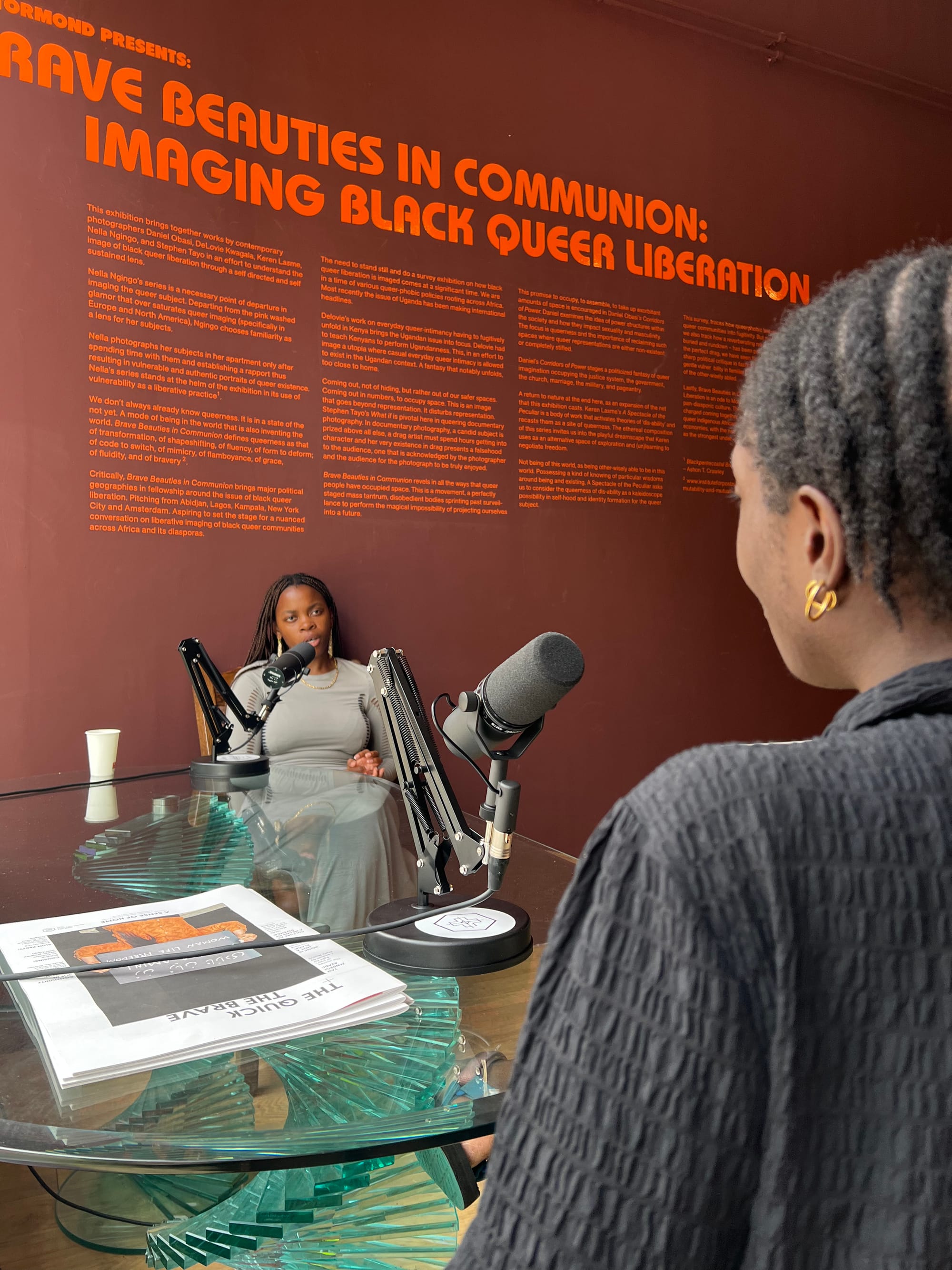
Listen to TQTB Podcast 001 with Musoke where she talks liberation, curation, Black queer art and Motormond’s first exhibition at contemporary photography fair, Unseen featuring ‘Errant Black Girlhoods’ by Nella Ngingo. (September 2024)
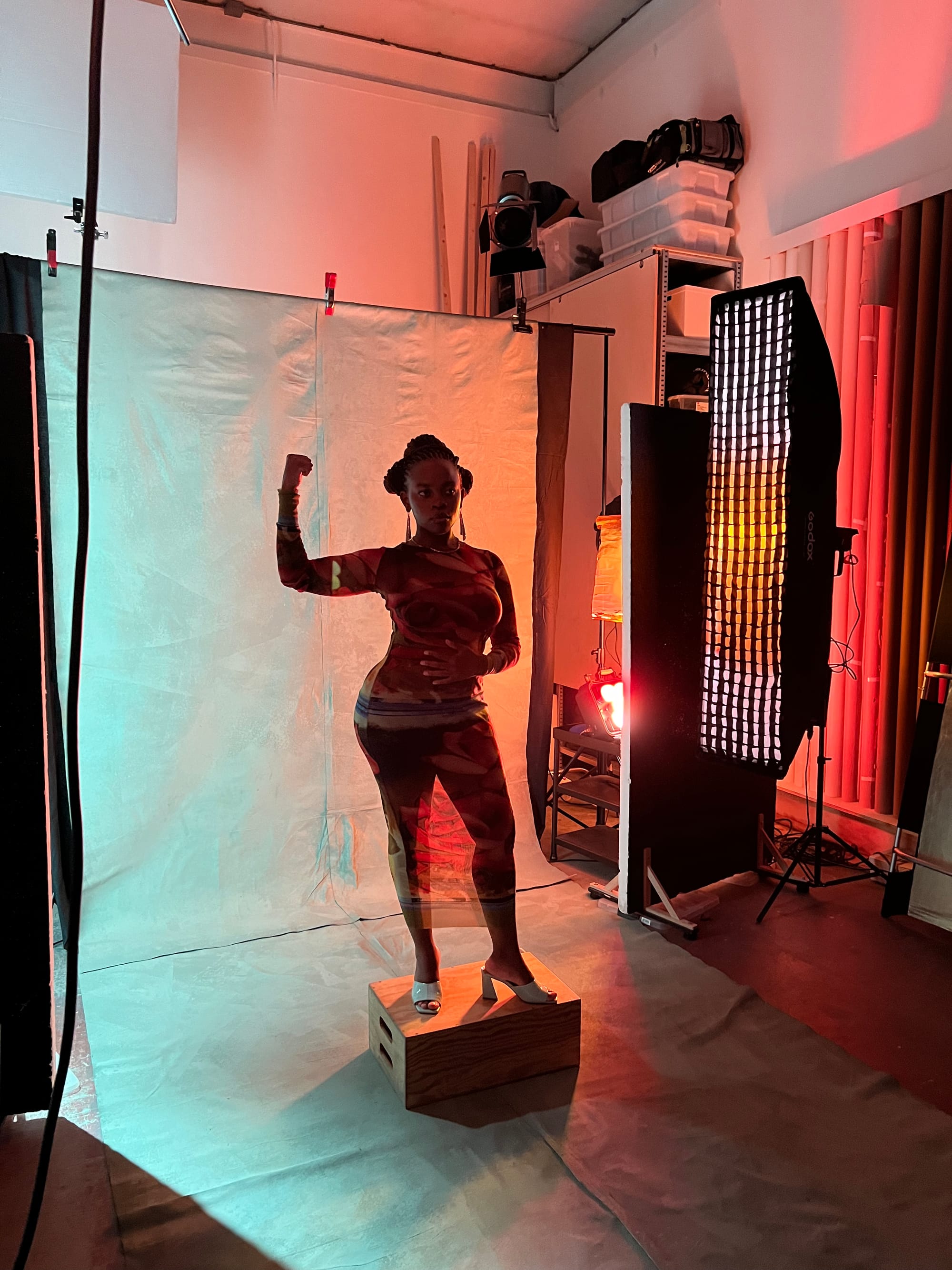
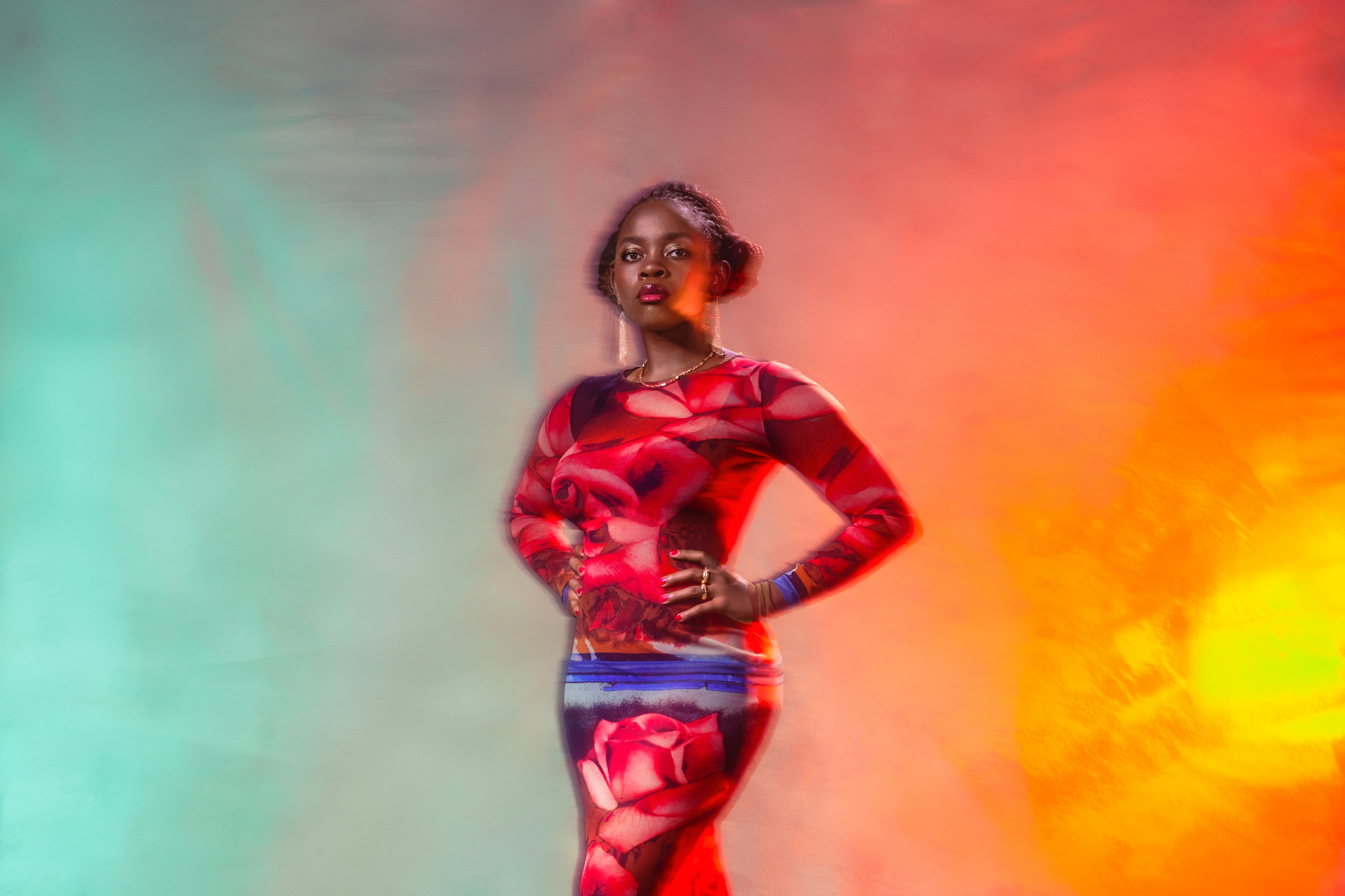
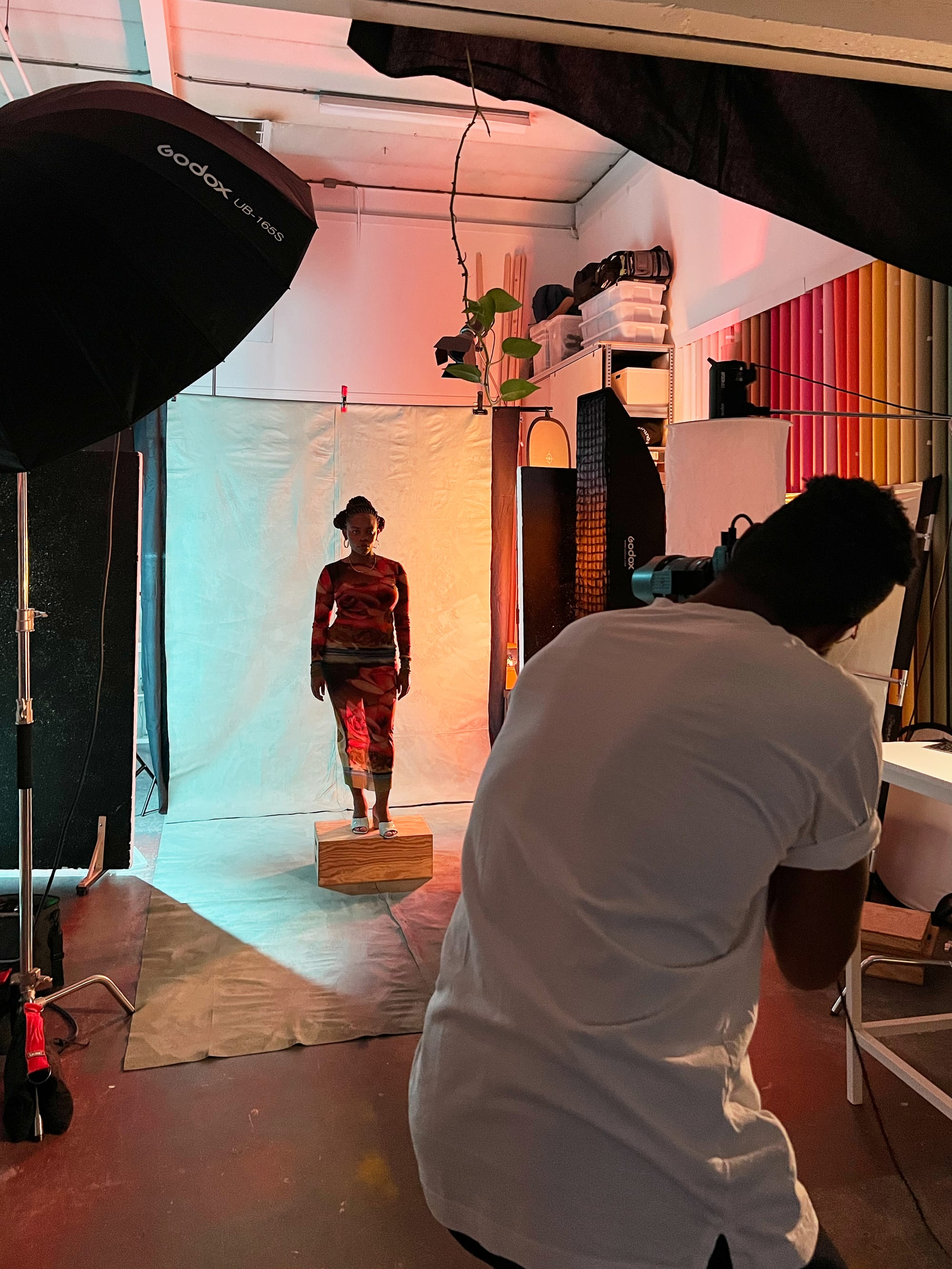
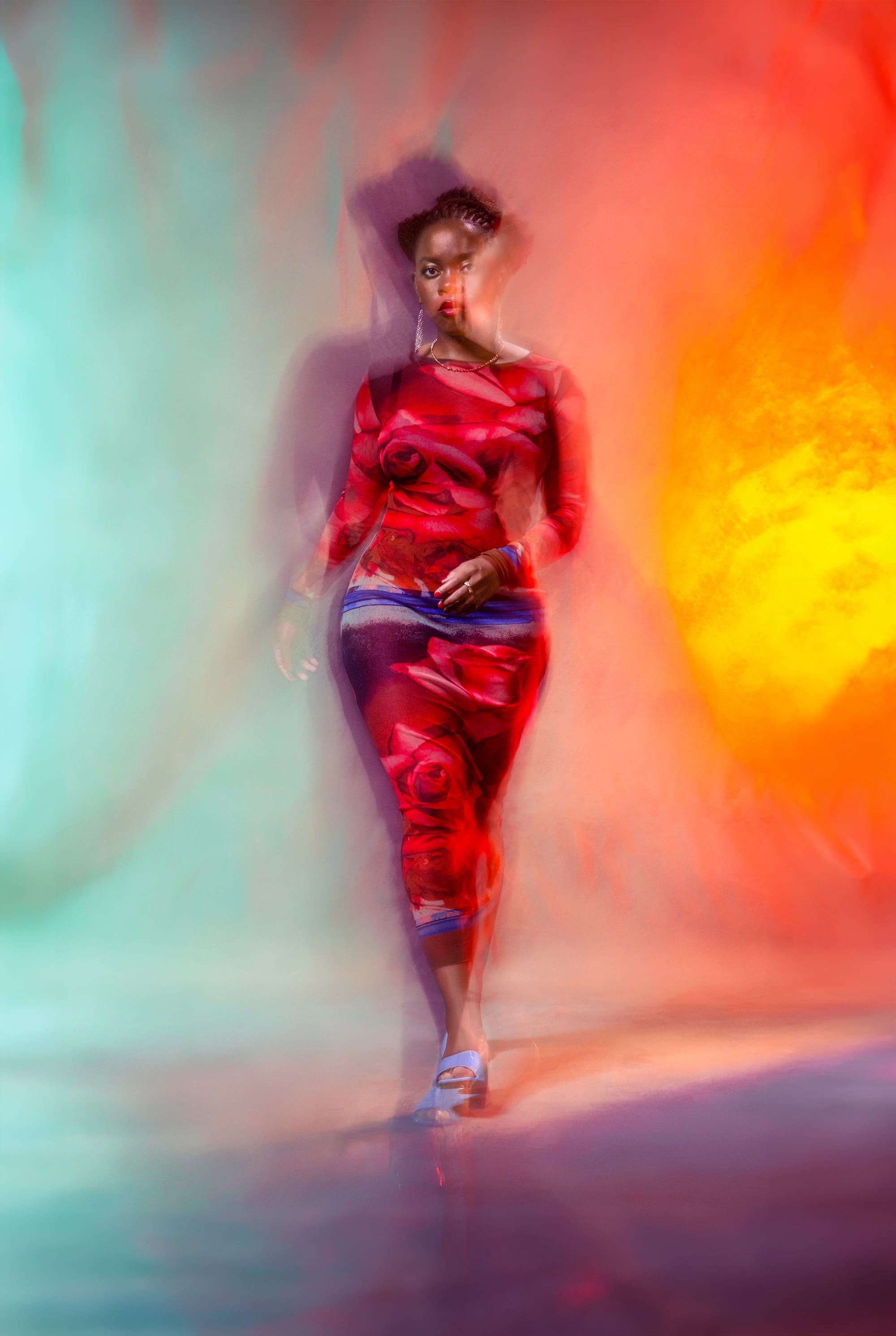
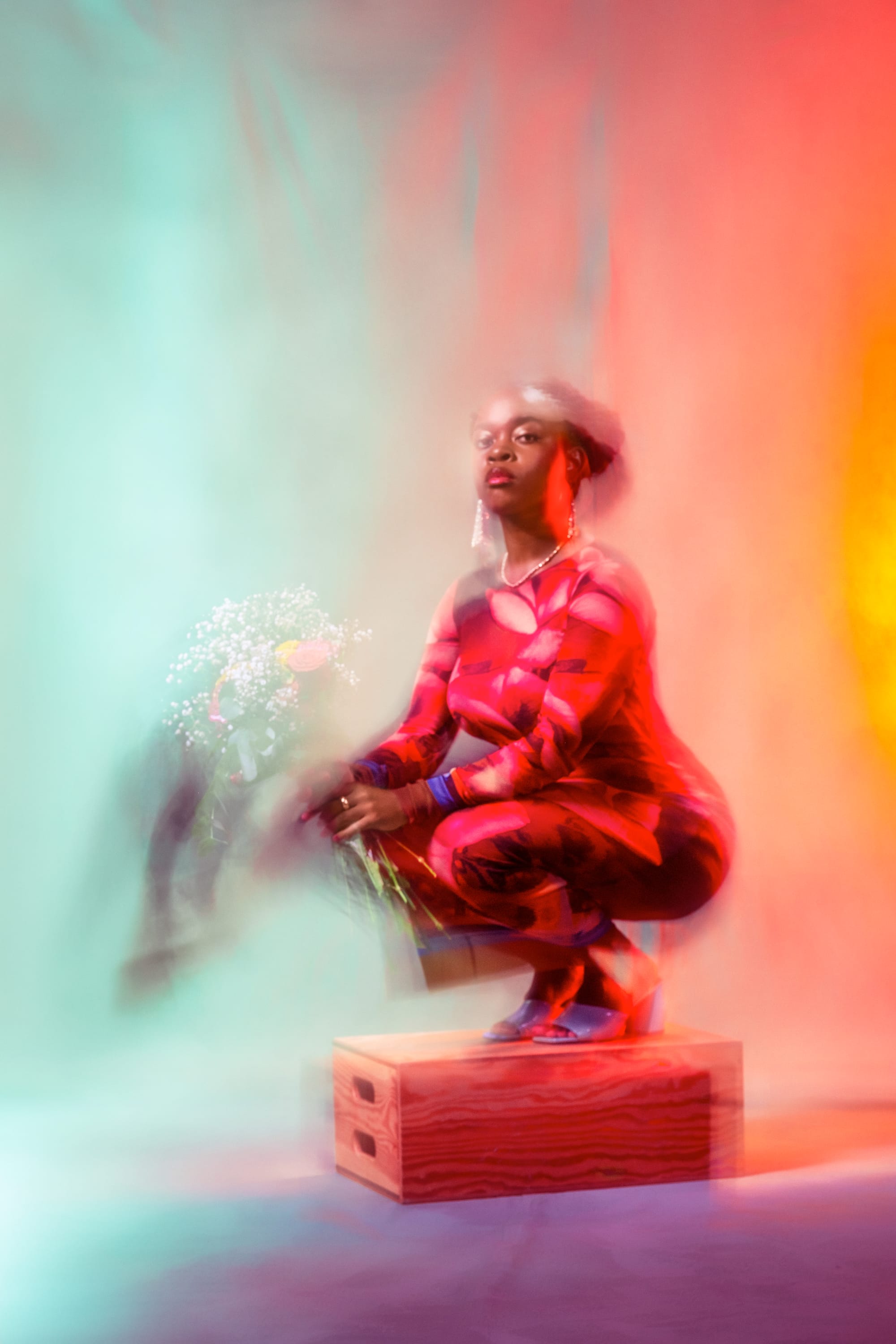
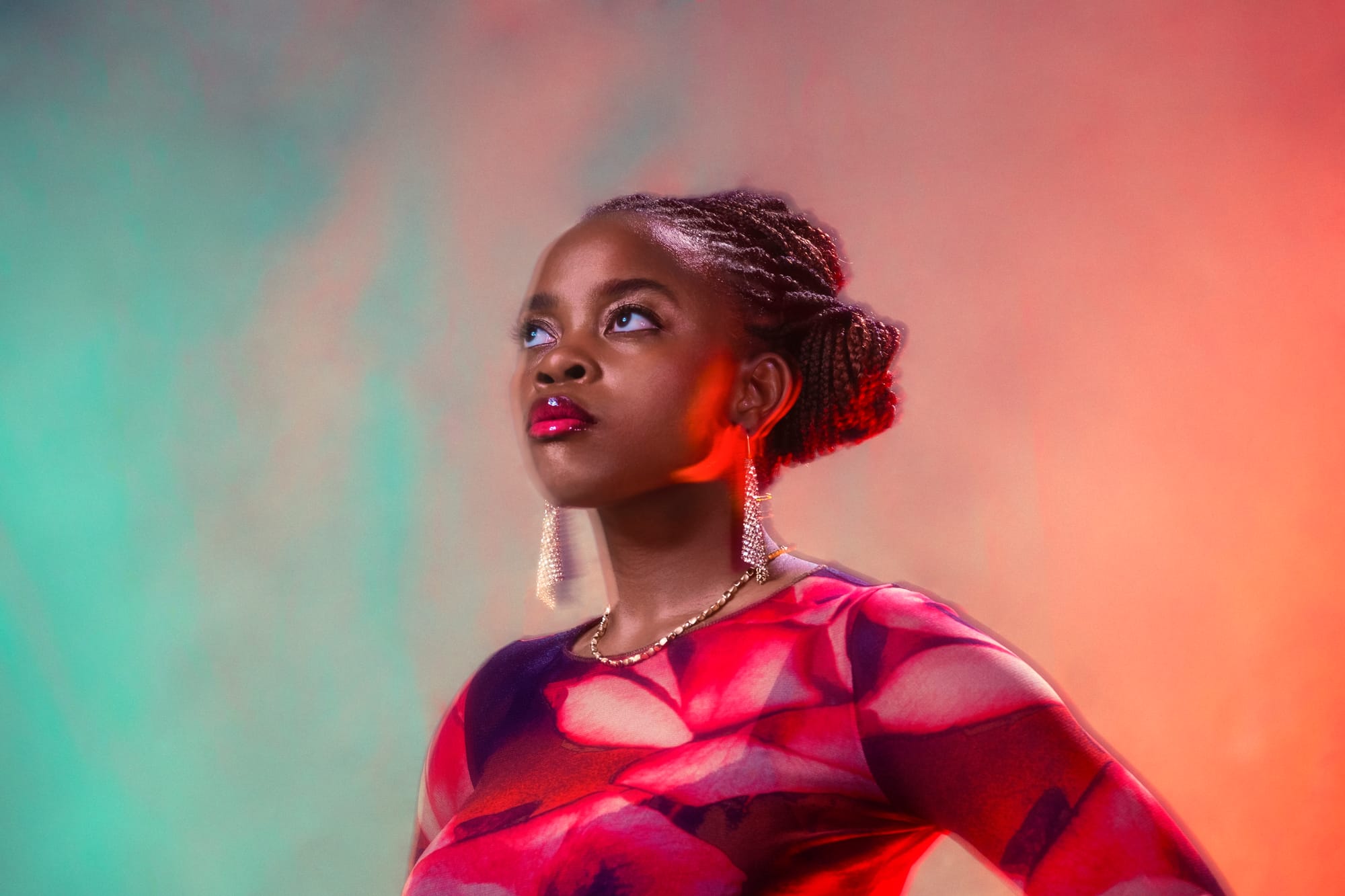
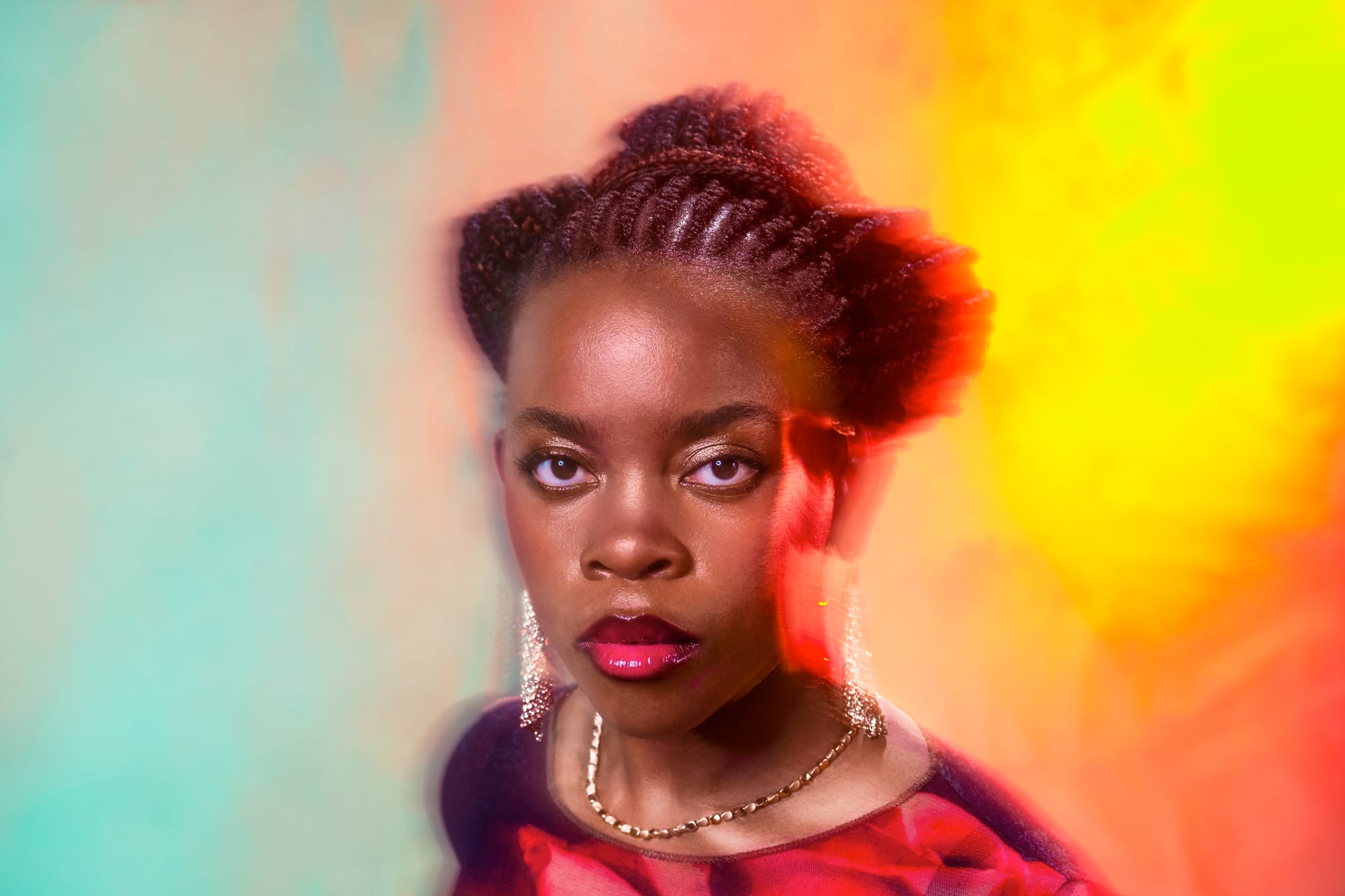
Photography + Creative Direction: Obi Mgbado
Wardrobe: Jean Paul Gaultier, Melissa Shoes + Y/Project
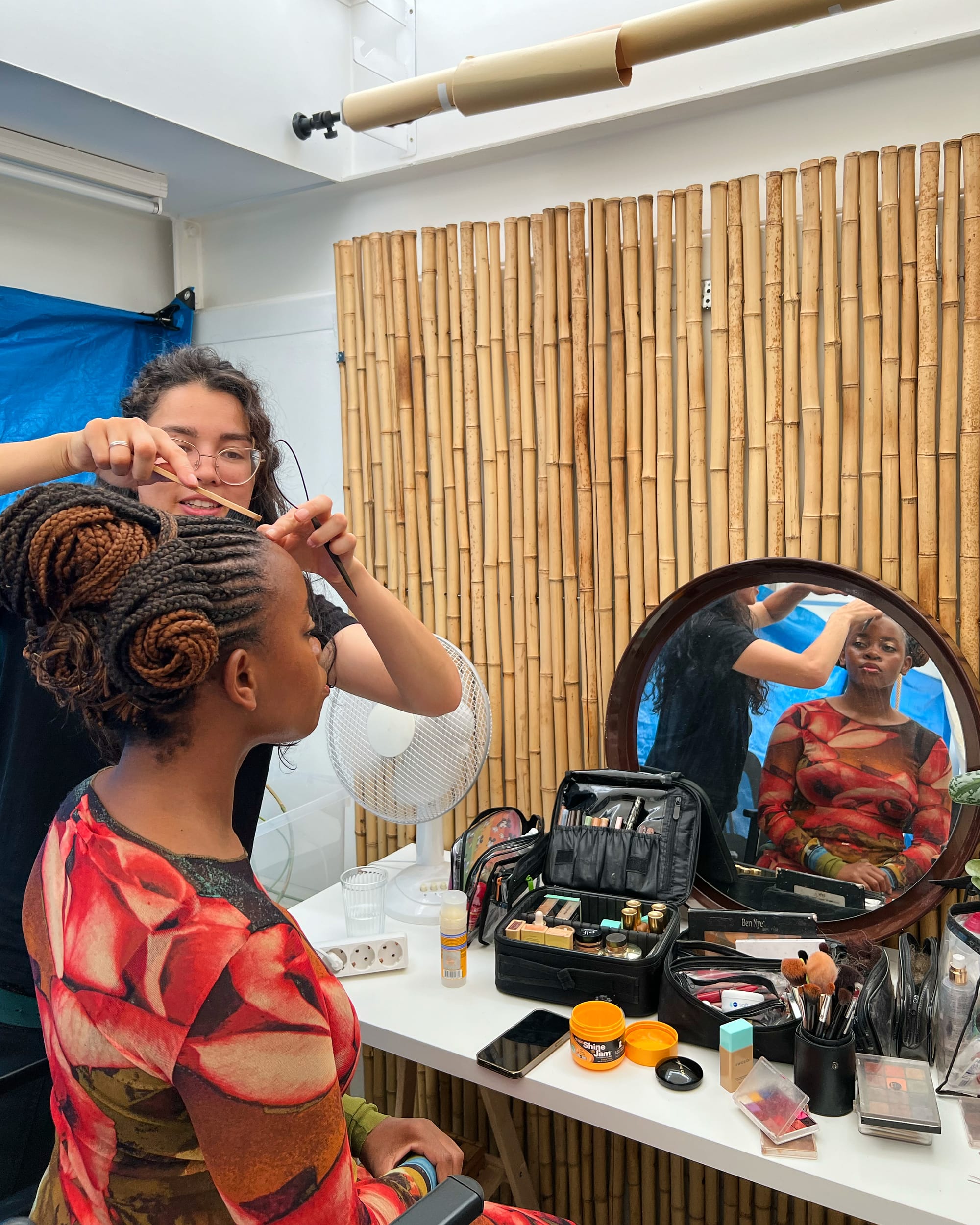
Hair and Make-up: Charlotte van Beusekom
Producer: Marie-Anne Leuty
Post: Beata Ana Korozo